
End of Life Comfort Measures: Complete Guide for Families
Table of Contents
- Understanding End of Life Comfort Measures
- The Core Principles of End-of-Life Comfort Care
- Medical and Alternative Therapies for End-of-Life Comfort
- Practical Comfort Measures for Family Caregivers
- Specialized Support Programs for Patients and Families
- Frequently Asked Questions About End-of-Life Comfort
- Embracing Comfort: A Message from Cherish Hospice
Understanding End of Life Comfort Measures
At Cherish Hospice, we believe that end of life comfort measures represent the heart of compassionate hospice care. Rather than chasing a cure, comfort measures focus on preserving dignity, managing pain, and surrounding patients and their families with emotional and spiritual support. This holistic philosophy means we attend to the whole person, including physical, emotional, and spiritual needs, so that every moment matters.
Our interdisciplinary team works together to tailor comfort-focused care to each individual. A medical director oversees personalized pain and symptom management, while skilled nurses and hospice aides assist with daily activities like bathing and mobility to maintain dignity. Our hospice care services include alternative therapies such as Cherish Touch and aromatherapy that bring moments of peace and relief. Spiritual care providers, social workers, and trained volunteers address emotional and spiritual needs, and our 24/7 response team ensures immediate support whenever a concern arises. We also wrap our arms around the family, offering bereavement counseling and ongoing support, because we treat your family like our own.
We cannot change the outcome, but we can affect the journey. For us, care always matters. If you would like to learn more about how our comfort measures can support your loved one, please reach out to our care team.
Results may vary based on individual patient conditions. Please consult with a healthcare professional for personalized medical advice.
The Core Principles of End-of-Life Comfort Care
When exploring end of life comfort measures for a loved one, families often face the profound transition from seeking a cure to focusing on quality of life. At Cherish Hospice, we believe that care always matters—that comfort, dignity, and compassionate support form the heart of every day. Our approach contrasts with aggressive curative treatments by prioritizing symptom management, emotional well-being, and spiritual peace without promising a cure or hastening death. This shift in goals lies at the core of our hospice care, which we provide throughout our service areas in Ohio and Indiana, including Springfield, Canton, and Warsaw.
The table below highlights the key differences between comfort-focused and curative care.
| Aspect | Comfort-Focused Care (Hospice) | Curative Care |
|---|---|---|
| Primary Goal | Maximize quality of life, manage symptoms, and support emotional/spiritual well-being | Cure the underlying disease, extend life at all costs |
| Approach to Treatment | Symptom management, pain relief, non-invasive therapies | Aggressive medical interventions, surgeries, chemotherapy |
| Care Team | Interdisciplinary: doctors, nurses, aides, social workers, chaplains, volunteers | Primarily physician and specialist-driven |
| Location | At home, assisted living, nursing home, inpatient hospice facility | Hospitals, clinics, specialist offices |
| Family Support | Bereavement counseling, caregiver respite, spiritual support | Minimal structured family support; focus on patient treatment |
Let’s walk through each aspect and see how comfort-focused care transforms the experience. As shown in the table, our primary goal is to maximize quality of life rather than cure the underlying disease. We focus on managing pain and other symptoms so patients can spend meaningful time with family while enjoying the highest possible comfort. These comfort-focused measures at the end of life prioritize symptom relief and non-invasive therapies. Our team uses expert pain management, alternative therapies like Cherish Touch, aromatherapy, and pet therapy, as well as assistance with daily living—all designed to keep patients comfortable without aggressive interventions.
The care team behind this approach is truly collaborative. Our interdisciplinary group includes doctors, nurses, hospice aides, social workers, chaplains, and volunteers. Volunteers also play a central role by providing companionship, memory-book creation, and veteran pinning ceremonies. For those interested in giving back, we warmly invite you to explore hospice volunteer opportunities in our communities. This network ensures that every dimension of a patient’s need—medical, emotional, and spiritual—receives dedicated attention.
Location is another key difference. We deliver care wherever the patient calls home—whether that’s a private residence, an assisted living facility, a nursing home, or an inpatient hospice unit. Our 24/7 response team ensures that expert support is always close, even in familiar surroundings. Meanwhile, family support extends far beyond medical visits. Through bereavement counseling, caregiver respite, and spiritual guidance, we wrap comfort around the whole family. Our grief support continues for at least one year after a loss, because we understand that healing takes time.
The side-by-side comparison makes it clear that comfort-focused care is not about giving up, but about choosing a compassionate path that honors the whole person. Our care always matters, and we accompany families on this journey with tenderness and expertise.
Comfort-focused care vs. curative care side-by-side.
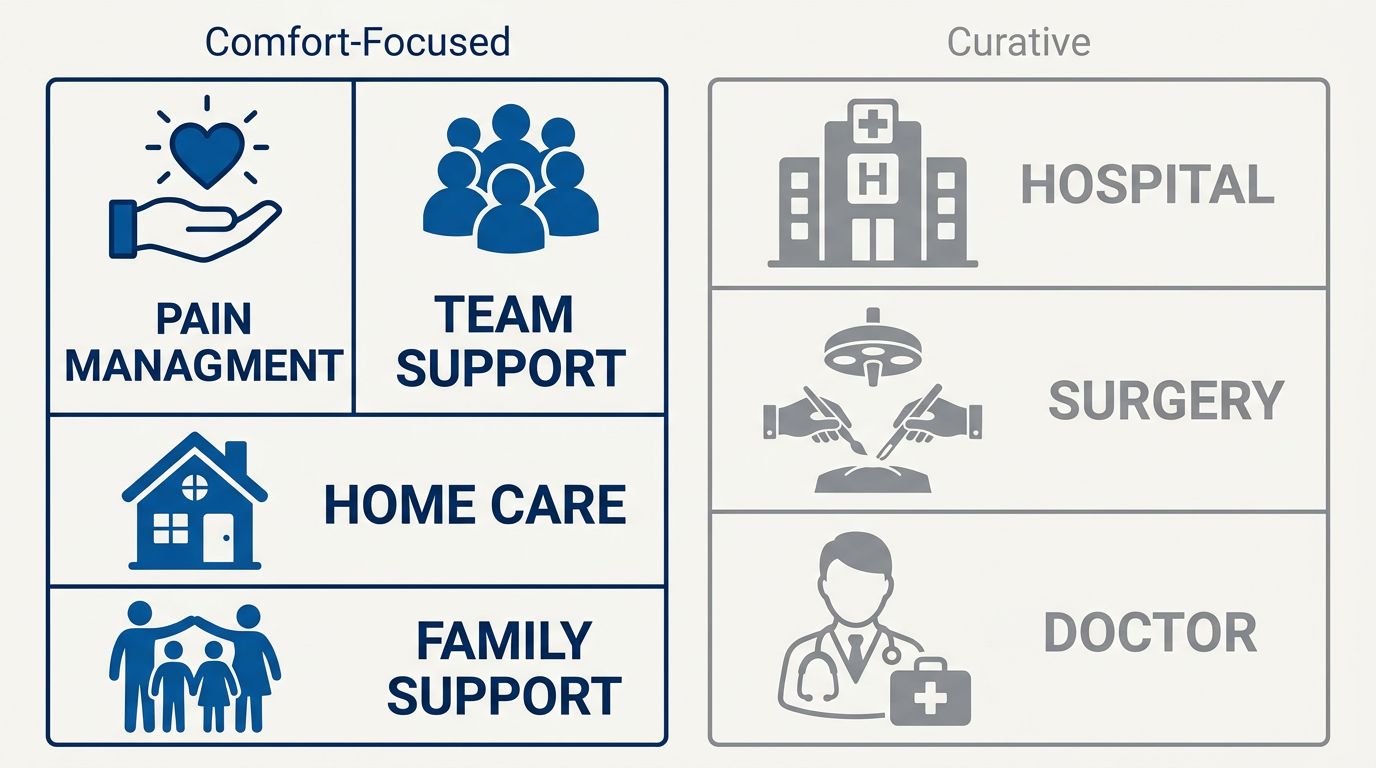
Comfort-focused care vs. curative care side-by-side.
At Cherish Hospice, we cannot change the outcome, but we can affect the journey. We treat your family like our own, providing compassionate care, spiritual support, and unwavering presence. Whether you are in Springfield, Canton, Warsaw, or any of our surrounding Ohio and Indiana communities, we are here to walk with you every step of the way. Results may vary based on individual patient conditions.
Medical and Alternative Therapies for End-of-Life Comfort
At Cherish Hospice, we focus on comfort when cure is no longer possible, believing that care always matters in every moment. Two broad categories of therapies work together to achieve this: medical and alternative. Understanding these end of life comfort measures helps families feel informed and reassured as they navigate the hospice journey with their loved one. Each approach addresses different aspects of well-being, and together they create a comprehensive comfort plan that honors the whole person.
Common Medications Used in Hospice Care
Medications play an essential role in managing physical symptoms and helping patients remain comfortable. According to industry guidelines from Advancing Expert Care, hospice physicians commonly prescribe several categories of medication based on each patient’s specific needs. Opioids such as morphine can help manage moderate to severe pain and are carefully dosed to provide relief while preserving alertness when possible. Anticholinergics work to reduce excess respiratory secretions that may cause discomfort, while antiemetics target nausea and vomiting that sometimes accompany illness or other medications. Anxiolytics, including benzodiazepines, may provide comfort by easing anxiety, restlessness, and shortness of breath. Our medical director oversees each prescription, collaborating closely with our skilled nursing team to adjust medications as symptoms change. This individualized approach means your loved one receives the right medication at the right time, with 24/7 monitoring to ensure optimal comfort.
Managing Pain and Respiratory Distress
Pain and breathing difficulties are among the most common concerns families have when a loved one enters hospice care. Our protocols for managing these symptoms emphasize both medication and supportive measures that may provide comfort without unnecessary intervention. Morphine remains a cornerstone of dyspnea management because it can help relax breathing and reduce the sensation of air hunger, making each breath feel easier. When appropriate, oxygen therapy may provide comfort by delivering supplemental oxygen through a nasal cannula or mask, though we always evaluate whether it truly contributes to the patient’s well-being. Our dedicated response team coordinates these interventions around the clock, ensuring that if pain or respiratory distress arises at any hour, a nurse can respond promptly with the appropriate medication or adjustment. This level of responsiveness means families in communities like Springfield, OH, and Canton, OH can feel confident that professional support is always available when needed most. By continuously assessing comfort levels and communicating with families, we can help manage symptoms effectively while respecting each patient’s wishes and dignity.
Alternative Therapies: Aromatherapy and Pet Therapy
Beyond medications, we offer alternative therapies that nurture emotional well-being and provide sensory comfort at the end of life. These non-pharmacological approaches can help manage anxiety, promote relaxation, and create moments of joy and connection. Cherish Touch involves gentle hand and foot massage delivered by trained volunteers, offering soothing physical contact that can help ease tension and communicate care without words. Aromatherapy uses calming scents such as lavender or chamomile to create a peaceful environment, often helping patients relax when anxiety or restlessness is present. Our volunteer program also includes pet therapy, where trained therapy animals visit patients, providing unconditional companionship that can lift spirits and reduce feelings of isolation. These comfort measures integrate seamlessly with medical therapies—while medications address physical symptoms at a clinical level, alternative modalities reach the emotional and spiritual dimensions of a person’s experience. All alternative therapies are delivered by trained volunteers or therapists under the guidance of our care team, and we work with families to determine which approaches resonate most with their loved one.
The following table compares medical and alternative therapies to help families understand how each contributes to whole-person comfort in hospice care:
| Therapy Type | Primary Benefit | Examples | Administration |
|---|---|---|---|
| Medical/Pharmacological | Symptom control: pain, dyspnea, nausea | Opioids, benzodiazepines, anticholinergics | Prescribed by medical director; nursing team |
| Alternative/Complementary | Emotional comfort, relaxation, sensory | Aromatherapy, Pet Therapy, Cherish Touch | Trained volunteers and family members |
This complementary relationship between medical and alternative therapies reflects our commitment to treating the whole person, not just isolated symptoms. While medications can help manage physical pain and respiratory distress, therapies like Cherish Touch and pet therapy nurture the emotional and spiritual dimensions that matter deeply to patients and families. Our volunteers, who receive specialized training in these modalities, bring warmth and presence to every interaction, creating moments of connection that can help ease fear and isolation. By integrating both approaches into each individualized care plan, we can help address the full spectrum of comfort needs that arise at the end of life, honoring each patient’s unique preferences and dignity throughout the journey.
Each therapy, whether medical or alternative, is delivered by a dedicated team member who brings specialized skills and compassion to the bedside. If you would like to learn more about how these approaches might support your loved one’s comfort, please hospice contact information to speak with a member of our care team. In the next section, we will introduce the interdisciplinary professionals who collaborate to provide this comprehensive care—from our medical director and skilled nurses to our hospice aides, social workers, chaplains, and trained volunteers.
Practical Comfort Measures for Family Caregivers
When a loved one is nearing the end of life, family members often want to help but worry about not having medical training. We want you to know that there are many meaningful ways to offer comfort. In this section, we share practical end of life comfort measures that can ease physical distress, strengthen your connection, and bring peace.
Non-Medical Comfort Techniques
Gentle physical care can profoundly affect comfort. Helping your loved one shift position every two hours relieves pressure and may help prevent skin breakdown. Ask our hospice aide for a demonstration so you feel confident. Keeping the mouth and lips moist with a soft cloth or sponge swab provides instant relief and shows attentive presence. A warm blanket—or a light throw around the shoulders—offers a sense of security. One of our hallmark therapies is Cherish Touch, a slow, gentle hand massage that eases tension and communicates love without words. Our staff can teach you the strokes; holding a hand in this way can soothe agitation. These end of life comfort measures are safe, require no equipment, and can be brought into each visit naturally.
Creating a Soothing Environment
The environment around your loved one can greatly influence their mood. Start by softening the lighting—dim the overhead bulbs and use a small lamp to create a calm space. Harsh lights agitate; gentle illumination promotes ease. Soft music, which we call Cherish Sounds, can mask unsettling noise and ease anxiety. Play their favorite quiet songs or nature sounds at a low volume. Surround the room with familiar objects: a family photo, a well-worn quilt, or a favorite book. These mementos ground the person in comforting memories. We also offer aromatherapy as a complementary therapy. A few drops of lavender oil in a diffuser may gently ease restlessness. Always check with our care team before using any scent, as certain conditions may need precautions. With these thoughtful adjustments, you can create a peaceful haven anywhere.
Emotional and Spiritual Support
A quiet presence is one of the most powerful gifts you can offer. Active listening—sitting at eye level, holding a hand, and letting your loved one speak—validates their feelings and reduces isolation. You don’t need the perfect words; your full attention says they matter. Reminiscing brings joy and perspective. Browse old photo albums together, share family stories, or play songs from their youth. Our volunteer program can help you assemble a memory book—a collection of photos and mementos that celebrates their life. Pet visits also lift spirits. Our pet therapy program brings calm animals to the bedside; if your loved one has a pet at home, we can discuss safe visits. For spiritual needs, our chaplains provide prayer, rituals, or a quiet presence—in person or by video call. Holding a hand in silence often brings the deepest peace. We cannot change the outcome, but we can affect the journey. At Cherish Hospice, we walk with you every step, honoring the love that surrounds your family.
As you consider which comfort measures to try, the table below summarizes these approaches for quick reference.
| Therapy Type | Primary Benefit | Examples | Administration |
|---|---|---|---|
| Medical/Pharmacological | Symptom control: pain, dyspnea, nausea | Opioids, benzodiazepines, anticholinergics | Prescribed by medical director; nursing team |
| Alternative/Complementary | Emotional comfort, relaxation, sensory stimulation | Aromatherapy, pet therapy, Cherish Touch, music therapy | Delivered by trained volunteers or family |
Every one of these measures is a way to show your loved one that they are cherished. Care always matters, and your gentle efforts make a real difference.
Specialized Support Programs for Patients and Families
Beyond essential clinical care, Cherish Hospice offers specialized programs that bring added emotional comfort and meaningful support to patients and families. At Cherish Hospice, we believe that genuine care extends far beyond physical symptom management. It means honoring the whole person and the community that surrounds them. Our commitment to end of life comfort measures extends into services that honor personal histories and strengthen family bonds, rooted in the belief that care always matters.
Our veteran hospice support welcomes patients with any length of military service through the Veteran Program. We help veterans and families navigate VA benefits, including help with Aid & Attendance applications and records gathering, and we organize pinning ceremonies to honor each veteran’s sacrifice. Veteran-to-veteran volunteer matching provides companionship and a shared understanding that deeply enriches daily life.
- VA benefit navigation and Aid & Attendance assistance
- Personalized bedside pinning ceremonies
- Veteran-to-veteran companionship and recognition events
The following table illustrates non-medical comfort categories:
| Category | Examples | Benefits | How to Get Started |
|---|---|---|---|
| Physical | Repositioning, lip care, gentle massage, warm blankets | Prevents bedsores, eases muscle tension, maintains dignity | Ask hospice aide for training; start with simple touch |
| Emotional | Active listening, reminiscence, playing favorite music | Reduces anxiety, fosters connection, lifts mood | Sit at eye level, hold hand, use calm voice |
| Spiritual | Prayer, scripture reading, rituals, chaplain visits | Provides peace, addresses existential concerns, honors beliefs | Contact hospice chaplain; arrange a visit or video call |
This comparison highlights the extra layers of recognition and practical support we provide for those who served, while easing the burden on families.
Beyond veterans, our Bridge Program hospice support reaches individuals not yet qualifying for hospice or palliative care. Through nursing guidance, advance directive counseling, and disease-management education, we help families plan ahead so they never feel alone, reflecting our promise that we treat your family like our own.
Our volunteer services play a vital role. Hospice volunteer programs offer companionship, memory book creation, family photography, and specialized veteran outreach. Volunteers bring presence and warmth, helping us fulfill our belief that we cannot change the outcome, but we can affect the journey.
These specialized programs are woven into our holistic care, ensuring that every patient and family receives compassionate support tailored to what matters most to them.
Frequently Asked Questions About End-of-Life Comfort
Understanding end of life comfort measures can bring peace of mind. Here are answers to common questions, grounded in our belief that care always matters.
How can I start an end-of-life care conversation with my family?
Our FAQ page provides gentle conversation starters. We focus on dignity, quality of life, and our 24/7 team offers individualized pain management and symptom control.
Can comfort care be provided at home or in an assisted living facility in Ohio?
Yes, we bring comfort care to homes and assisted living facilities across Springfield, Canton, and beyond. As our Ohio FAQ explains, skilled nursing and support come to you.
How do I contact Cherish Hospice for more information?
Visit our contact page for phone numbers or to request a free in-home assessment. Our team is ready to discuss end-of-life comfort care. Hospice focuses on comfort, not cure; results vary by individual. We’re here for you every step of the way.
Embracing Comfort: A Message from Cherish Hospice
At Cherish Hospice, we believe that every moment carries dignity and comfort, which is why our approach centers on end of life comfort measures tailored to each person’s journey. We cannot change the outcome, but we can affect the journey — care always matters, and we treat your family like our own.
Our 24/7 dedicated response team ensures that support is always available in Springfield, OH and surrounding communities, so you can focus on end-of-life comfort. Explore our hospice palliative nursing portal for deeper resources, and next, see how we manage pain and symptoms.
Resources
- Find Personalized Hospice Care from Cherish Hospice
- Explore Volunteer Opportunities at Cherish Hospice
- Contact Cherish Hospice for Care Information
- Get Bereavement Support in Dayton Ohio with Cherish
- Start Hospice Care Quickly in Springfield Ohio
- Begin End-of-Life Care Conversations with Family
- Get Comfort Care at Home or Assisted Living Ohio
- Access the Hospice Nursing Credentialing Portal