

Table of Contents
- Starting Your Journey: Supporting a Loved One in Hospice in Springfield, Ohio
- What to Know Before You Begin Supporting a Loved One in Hospice
- Step 1: Understand Hospice Care and What to Expect
- Step 2: Offer Emotional Support Through Active Listening
- Step 3: Ensure Daily Comfort with Simple, Non‑Medical Measures
- Step 4: Communicate Effectively with the Hospice Care Team
- Step 5: Create Meaningful Memories and Legacy Moments
- Step 6: Take Care of Yourself While Caring for Your Loved One
- Step 7: Choose Thoughtful Gifts and Comfort Items for Hospice Patients
- Troubleshooting Common Concerns When Supporting a Loved One in Hospice
- Moving Forward with Confidence and Compassion
Starting Your Journey: Supporting a Loved One in Hospice in Springfield, Ohio
Supporting a loved one in hospice in Springfield, Ohio starts with recognizing that comfort and dignity become the central goals. At Cherish Hospice, our philosophy is that care always matters—we provide a 24/7 dedicated response team that answers questions and offers hands-on help; day or night, our clinicians are ready to provide immediate comfort and clinical guidance, so you are never left without support. We carefully manage symptoms and honor personal wishes wherever care takes place, at home, in an assisted living community, or a nursing facility. We understand the emotional weight of this decision, and we are here to support you with warmth, guidance, and clear information. When you know what to expect and how to prepare, you can create a calming environment that honors your loved one’s wishes and makes each moment meaningful. That knowledge and readiness can make all the difference as you begin this journey of support.
Key Takeaways
- Entering hospice care marks a shift from pursuing curative treatment to prioritizing comfort, dignity, and quality of life for your loved one.
- Hospice care is not about giving up; it’s about shifting the goal from curing an illness to surrounding a person with comfort, dignity, and relief from pain and symptoms.
- We understand that emotional support through active listening is a powerful way to comfort a loved one in hospice.
- Making small changes that you can do in life may be very useful in increasing the wellbeing of someone near to you.
- When supporting a loved one in hospice, clear communication with the care team is essential.
What to Know Before You Begin Supporting a Loved One in Hospice
Entering hospice care marks a shift from pursuing curative treatment to prioritizing comfort, dignity, and quality of life for your loved one. Understanding this change helps families focus on creating meaningful days rather than chasing treatments that no longer serve the patient’s goals.
A complete care team of doctors, nurses, social workers, chaplains, and trained volunteers surrounds each family, addressing not only physical symptoms but also emotional and spiritual needs. We cannot change the outcome, yet we can ensure every moment is supported with compassion and expertise. At Cherish Hospice, our 24/7 dedicated response teams provide immediate hands-on care and guidance whenever a question or concern arises, because comfort does not follow a nine-to-five schedule. Families also receive ongoing bereavement support for at least one year after a loss, so you are never left alone to navigate grief. Care is delivered in homes, hospitals, assisted living communities, and long-term care facilities throughout Clark, Miami, Montgomery, Champaign, Greene, and Madison counties, surrounding families in Springfield, Ohio with complementary therapies like aromatherapy, pet therapy, and music-based care that enhance daily comfort.
With that being said, we’ll take a closer look into just how hospice actually works, and what it might mean if you’ve got someone who needs it.
Step 1: Understand Hospice Care and What to Expect
Hospice care is not about giving up; it’s about shifting the goal from curing an illness to surrounding a person with comfort, dignity, and relief from pain and symptoms. Our hospice team, our interdisciplinary team—including doctors, nurses, social workers, chaplains, and volunteers—works closely to address the physical, emotional, and spiritual needs of both patients and their families.
Our hospice service can be provided anywhere that patients call home; in their own residence, at a hospital, within an assisted living community or in a long term care facility. Their families have 24 hour / 7 day access to a response team to provide direct hands on care and clinical guidance. This team provides skilled nursing, personalized pain management, spiritual care, and alternative comfort measures such as gentle touch and aromatherapy.
Because the journey doesn’t end when a loved one passes, our bereavement counseling and grief support continue for at least one year. We cannot control the disease, but we can affect the journey, helping families find moments of peace and connection.
Step 2: Offer Emotional Support Through Active Listening
We understand that emotional support through active listening is a powerful way to comfort a loved one in hospice. We know that simple, non-medical techniques can help ease feelings of isolation and validate the emotions your loved one is experiencing.
Sit down, be fully there, take someone’s hand in yours, then wait until they’ve told you all about themselves. Silence can sometimes speak volumes more than anything else ever could.
Active listening is more than hearing words. Reflect back what you hear, acknowledge emotions without trying to solve them. We treat your family like our own, so we encourage you to listen without an agenda.
Remember to talk positively about pleasant times when visiting Cherish Hospice. Discuss cherished vacation trips, tell jokes about funny moments in the family, and reminisce about life events. Your loved one will feel more satisfied with who they are as you do this and can experience joy from you.
Combined with such simple physical comforts as these, pairing this emotional care creates a soothing environment for your loved one.
Step 3: Ensure Daily Comfort with Simple, Non-Medical Measures
Making small changes that you can do in life may be very useful in increasing the wellbeing of someone near to you. We have found that it often makes a significant difference in people’s lives with simple physical adjustments around their environment. This can make a meaningful difference without medical intervention.
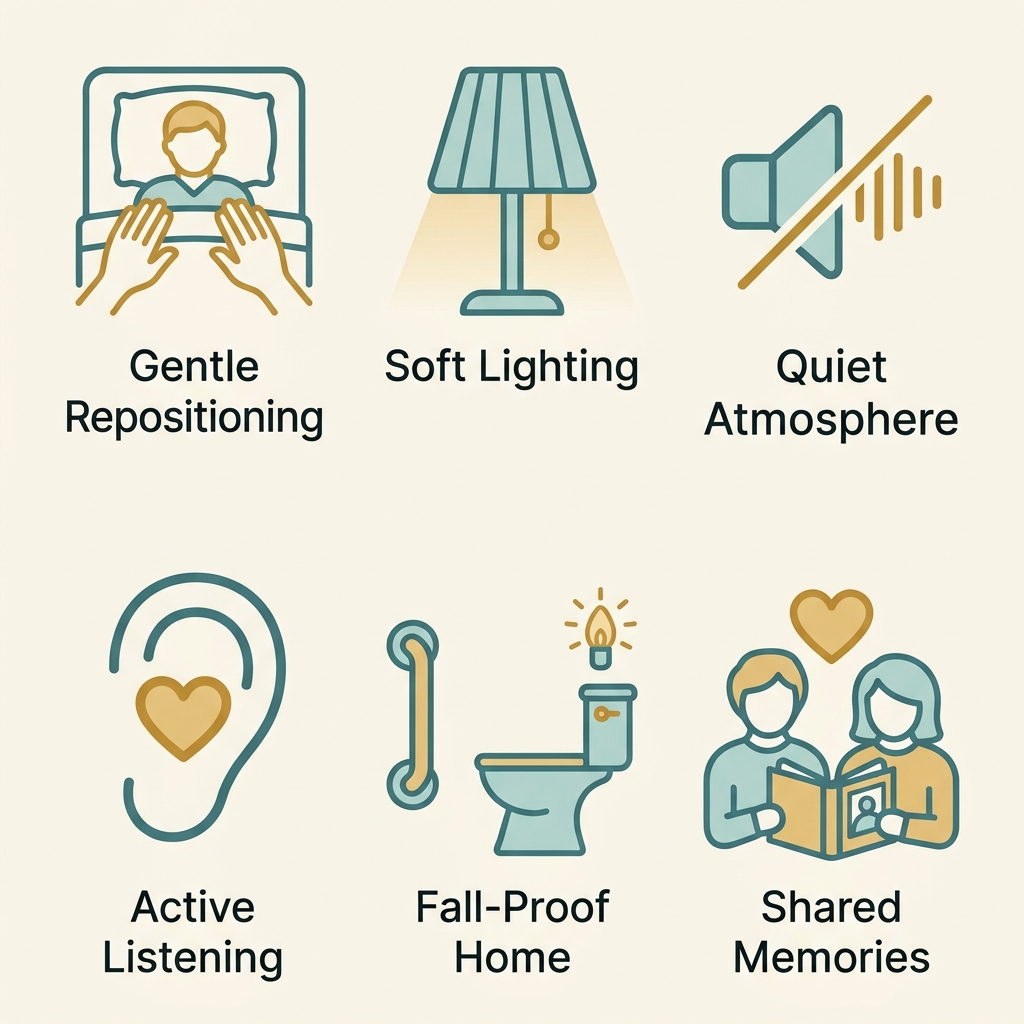
In addition to being repositioned every couple of hours to prevent pressure sores and keep your loved one’s skin intact, actively listen and engage him/her in reminiscing about old times that validates his emotions and relieves the loneliness he feels. If you have access to their home, be sure electrical cords are secured, throw rugs are removed, and grab bars are installed near toilets and in the shower. Place nightlights in bathrooms and hallways so your loved one can move safely at night. In the case of someone who is suffering from cognitive changes, labels on bedroom doors may be helpful, as well. By taking time to notice these issues early and talking with the hospice team, they will know what problems might arise next and how to plan to make life more comfortable for those closest to us as we approach the end of our journey together.
Step 4: Communicate Effectively with the Hospice Care Team
When supporting a loved one in hospice, clear communication with the care team is essential. Our dedicated response team is available 24/7 for urgent questions or concerns—families should never hesitate to call. Sharing your observations and asking the right questions helps ensure the patient receives the best possible care.
- Keep a simple daily journal of comfort levels, pain, appetite, and any questions that arise, and share this log at every team visit or phone call.
- Ask about any symptom changes immediately rather than waiting for the next scheduled visit—early communication helps maintain comfort.
- Reach out to our team anytime for guidance on comfort measures or symptom management; we’re here to support you.
- Prepare questions before each visit so you don’t forget important concerns; we welcome open conversations.
With clear communication easing the mental load, families can focus on creating cherished memories and meaningful moments together.
Step 5: Create Meaningful Memories and Legacy Moments
With clear communication in place, supporting a loved one in hospice becomes an opportunity to create meaningful memories through intentional, shared moments. Ask about our pet therapy visits if your loved one enjoys animals; these encounters often spark joy and become cherished memories. Record short audio or video messages sharing stories or words of encouragement. Our volunteers can help capture them, and we can create a calming atmosphere with aromatherapy or our Cherish Sounds program. You can also work with our team to assemble a memory book filled with photos and handwritten notes. And know that our bereavement counseling, available for at least a year after loss, can later help you process and celebrate the legacy moments you create together. As you embrace these memory-making opportunities, remember that caring for yourself is equally vital—our team is here to support your well-being, too.
Step 6: Take Care of Yourself While Caring for Your Loved One
Supporting a loved one in hospice is a deeply emotional journey, and caring for yourself is just as important as caring for them. Caregiving can be physically and emotionally demanding, and we want you to know that our entire team is here to support you—not just your loved one.
We have a 24/7 Response Team that is here to answer your questions and assist in times of trouble. Our Spiritual Care Team can offer comfort and grounding when you need it most, and we encourage you to accept help from our trained volunteers, who can provide companionship and respite so you can rest. After the loss, our bereavement counseling continues for at least one year, giving you ongoing emotional support during the grieving process.
Once you take care of your physical self, it makes sense to consider presents and accessories for your dear one’s enjoyment as well.
Step 7: Choose Thoughtful Gifts and Comfort Items for Hospice Patients
The most meaningful gifts for a hospice patient are those that soothe the senses and offer gentle comfort without causing stress. If you are wondering what is an appropriate gift for someone in hospice, consider items that engage the senses in a calming way.
- Aromatherapy: A lavender diffuser or mild-scented lotion can create a restful atmosphere. Our team provides Cherish Touch and aromatherapy services, and these same principles guide choosing a personal gift.
- Simple personal care: Soft hand lotion or unscented lip balm are easy to use even for a loved one with limited mobility and help maintain physical comfort.
- Memory-evoking items: A framed photo or a playlist of favorite music can bring emotional warmth without overwhelming.
Never go for complicated or troublesome presents when the person currently has low energy. Choose according to their likes and dislikes.
Troubleshooting Common Concerns When Supporting a Loved One in Hospice
When supporting a loved one in hospice, families often encounter pressing questions about pain management, around-the-clock help, and the cost of care. We’re here to address the most common concerns with clear, compassionate guidance.
Families may feel uncertain about what to do when a loved one’s pain spikes or breathing changes unexpectedly. Our 24/7 dedicated response team is always on call: our nurses can visit, adjust medications, and deliver hands-on comfort within the hour, so families never have to navigate a crisis alone.
A lot of families worry that bereavement support will end soon after a loss. The counseling we provide continues for at least one full year, allowing spouses, children, and close friends to receive compassionate guidance long after the initial days of mourning. This way, we are able to continue giving our loved ones comfort and support on their journeys through grief.
Financial concerns often bring anxiety into a family’s life. Medicare Part A typically covers nearly all hospice services, and the only out-of-pocket cost for pain-related prescriptions is up to $5 per prescription. Our team helps families understand these benefits so they can focus on what matters.
Often caregivers become overly stressed. That’s why our care team consists of professional chaplains, social workers, and trained volunteers that will provide both spiritual and emotional support allowing the family time for themselves as their loved one gets the specialized, thoughtful treatment they deserve.
These solutions will enable people in those situations to be more self-assured and empathetic about the fact there’s both emotional and practical help available to them.
FAQ
How can I provide the best emotional support to a loved one in hospice care?
Provide emotional support by practicing active listening: be fully present, hold their hand, and let them share without interruption. Reflect back their words and acknowledge their feelings without trying to fix them. Reminisce about joyful memories like family trips and funny moments to help them feel valued and connected.
What are practical ways to assist with a loved one’s daily comfort while they are in hospice?
Practical ways include repositioning your loved one every two hours to prevent skin breakdown and making the home safer by securing cords, removing throw rugs, and installing grab bars. Add nightlights in bathrooms and hallways. For those with cognitive changes, label rooms. Pair these physical comforts with active listening and reminiscing to ease loneliness.
How should I communicate with the hospice care team to ensure my loved one’s needs are met?
Communicate effectively by keeping a daily journal of your loved one’s comfort, pain, appetite, and any questions, and share this log with the team at each visit or call. Report symptom changes immediately rather than waiting for a scheduled visit. Prepare questions in advance and reach out to the 24/7 response team anytime for guidance.
What can I do to take care of my own emotional well-being while supporting a family member in hospice?
Take care of yourself by accepting support from the care team. Use the 24/7 response line for questions and respite. The spiritual care team offers grounding, and trained volunteers provide companionship so you can rest. Bereavement counseling continues for at least one year after loss, offering ongoing emotional support through grief.
How can I help my loved one create meaningful memories during their time in hospice?
Help create meaningful memories by asking about pet therapy visits, recording short audio or video messages of stories or encouragement with volunteer help, and assembling a memory book of photos and handwritten notes. Use aromatherapy or the Cherish Sounds music program to set a calming atmosphere for these shared moments.
Moving Forward with Confidence and Compassion
Facing the decline of someone dear brings fear and uncertainty, yet choosing to seek support is an act of profound strength. You don’t have to walk the path of supporting a loved one in hospice alone—our team is here to walk with you.
We provide 24/7 dedicated response, individualized pain and symptom management, and nurturing alternative therapies like pet therapy, aromatherapy, and music-based Cherish Sounds. Our care focuses on comfort and quality of life, not curative treatment, and families receive bereavement and grief support for at least a full year after loss. While each person’s journey is unique and results vary, our commitment is unwavering.
Feel free to contact us here at (937) 355-7154 or info@cherish-hospice.com. You can stop receiving services whenever you want; hospice care focuses on comfort rather than cure. Contact your own doctor before taking action regarding medical matters. Protected Health Information will be treated confidentially pursuant to HIPAA regulations.
Connect with Cherish Hospice Today
Now that you’ve explored the steps to support a loved one in hospice, from active listening and daily comfort measures to effective communication and legacy creation, you are well-prepared to provide meaningful care. Implementing these strategies is even more impactful when you have a dedicated team by your side. Our hospice offers 24/7 response teams, individualized pain and symptom management, and specialized therapies like Cherish Touch and aromatherapy to ensure comfort. Our bereavement support continues for at least one year after a loss, so you are never alone. Reach out to our compassionate professionals in Springfield, Ohio, at (937) 355-7154 or info@cherish-hospice.com for personalized guidance. Taking the next step with Cherish Hospice means turning knowledge into action with a partner who truly cares.
Connect with Cherish Hospice Today