

Table of Contents
Understanding the Role of Social Workers in Hospice Care
The role of social workers in hospice care is to provide emotional and practical support that helps patients and families navigate this challenging time with dignity and connection. Our interdisciplinary team includes doctors, nurses, chaplains, volunteers, and social workers, all working together to address the full spectrum of needs during end-of-life care. Hospice social workers listen without judgment, connect families with community resources, and coordinate care plans that honor each patient’s values and wishes.
This role helps families to get the right information that is relevant to them and reduces stress allowing them to spend time in more meaningful ways as a family. social workers can help the family to communicate better with the care team and provide additional resources as necessary which make things a bit easier for everyone.
Key Takeaways
- Welcome to the next step of inviting a hospice social worker into your home.
- To understand the role of social workers in hospice care, start with your first meeting with our social worker.
- After you meet with the social worker, the next focus should be on providing emotional support to your family members.
- Now armed with emotional support, we’re going to talk about practical steps that will put your whole family at ease.
- Once legal planning has taken place, it’s normal for people to begin to worry about how to pay for all that’s needed.
What to Know Before You Begin
Welcome to the next step of inviting a hospice social worker into your home. This can be quite daunting, but we’re here to help you get ready for this and support you from the beginning.
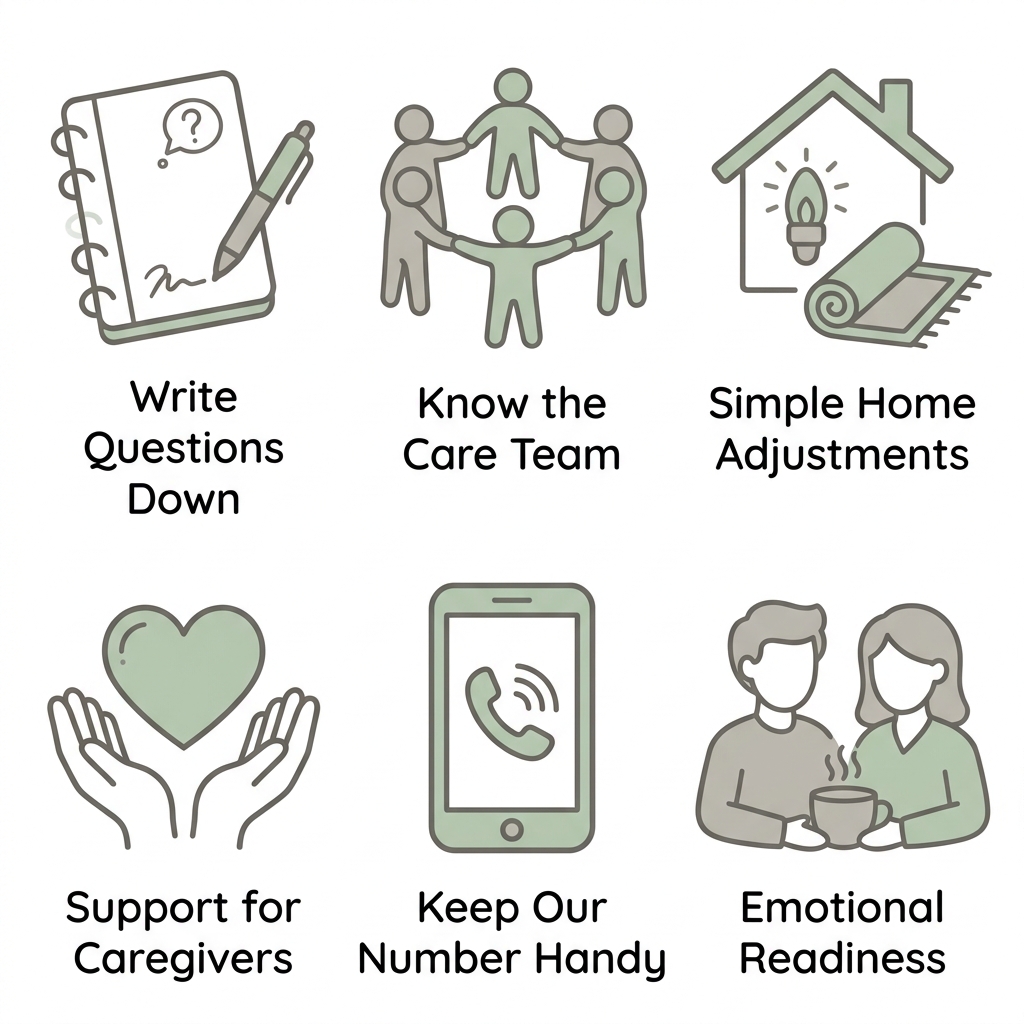
Because hospice cares for your whole family, not just your loved one, taking some time to prepare emotionally will also make things easier on all of you. Make a list of your questions about comfort measures, communication with our team of caregivers and how you can make lasting memories together.
You’ll meet our team of doctors, nurses, social workers, chaplains and volunteers, so it helps to know who they are in advance, so you can feel more comfortable visiting your loved one. Minor changes around their home, such as removing rugs or adding night lights, can help improve daily living conditions immediately.
We’re here to help. Our team will offer resources to help you as a caregiver and bereavement support for at least one year from your loss. Prior to your first visit, please keep our contact information nearby should you have questions at any point.
Step 1: Meet Your Hospice Social Worker
To understand the role of social workers in hospice care, start with your first meeting with our social worker. Like the rest of our interdisciplinary team (which also includes doctors, nurses, social workers, chaplains and volunteers), our social worker will become an integral part of you and your family’s support system throughout this journey. Our social worker serves as a trusted advisor and advocate for you, to help you work through emotional, practical and logistical issues along the way.
In that first conversation we will hear about your concerns, and talk about how our 24/7 response team can help in a crisis. We’ll start to connect with you so you have someone who hears you, understands you, and can coordinate with all of us on your team. When this happens, your social worker relationship begins. Then you’ll feel more prepared to focus on what matters most : your family’s well-being and comfort.
This first meeting is also the start of on-going emotional and social support specific to your family’s unique situation.
Step 2: Build Emotional Support for Your Family
After you meet with the social worker, the next focus should be on providing emotional support to your family members. The social worker will work with a team of other professionals including social workers, chaplains and volunteers. These team members will walk beside your family, not only your loved one. These may be times you talk with your family, or be quietly present, or even sit down together and make memory books. It really matters.
You can call our 24/7 dedicated response team anytime you are feeling overwhelmed, day or night. Grief and bereavement support from our team will last for a minimum of a whole year following the death of your loved one, so you are never alone on this journey. Don’t forget: caregivers need to be cared for too. The response team provides support and resources to help you cope, so you can keep caring for your family.
With emotional readiness in place, families can shift their focus to advance directives and legal planning, making sure every action is done out of love and understanding.
Step 3: Complete Advance Directives and Legal Planning
Now armed with emotional support, we’re going to talk about practical steps that will put your whole family at ease. Having our loved one’s advance directives completed allows us to honor their wishes without the stress of deciding everything on the fly, which means we get to make those wonderful memories together.
Our social worker plays a key role in guiding families through these documents. They explain the difference between a living will and a healthcare power of attorney in plain language, ensuring we understand each option before making decisions. They include supporting families through advance directives and legal planning.
Now that the legal stuff is out of the way, there are some other resources we have to help us as a family through this.
Step 4: Connect with Financial and Community Resources
Once legal planning has taken place, it’s normal for people to begin to worry about how to pay for all that’s needed. We have social workers on our team and are able to connect you to the hospice team to help you discover any coverage, benefits and other local supports that may be available. That way, you won’t feel like you’re on your own financially.
Medicare Part A usually covers most hospice services, and pain prescriptions are capped at a small out-of-pocket amount. We offer an on-call team 24/7 for any urgent questions and our office is open Monday-Friday from 8:00 AM to 5:00 PM to help with coverage info and resources.
Grief support and bereavement continues for families for a minimum of one year following a loss, so count on our team to be here for you with emotional care when you need it.
Now that’s out of the way, you can actually spend some real time together.
Step 5: Plan for Meaningful Moments Together
Once the practical stuff is in place, we get to the essence of caring for your loved one: using every moment you have left together wisely. Small moments add up and make up the memories you’ll carry as your family.
We invite families to collect favourite photos or music, or even make simple keepsakes such as a memory book with our volunteer services’ help. Gentle touch based comfort therapies and pet therapy can turn boring visits into calming, meaningful moments that respect your loved one’s dignity and bring comfort to all who enter the room.
We’re here to help you create those special days that mean as much to you as they do to your loved one. On hard days, come to us. We’ll be there walking beside you.
Step 6: Lean on Grief and Bereavement Support
Even when we share special moments together with someone we love, grief is a part of every hospice journey. Our hospice team supports families in Springfield and beyond not just when their loved one is here, but throughout the following months as well. Bereavement support starts before a loss occurs, and lasts well into the future: families can receive grief counseling from a trained professional for up to a full year. Every plan is customized to fit the unique needs and preferences of each family, making sure the support they need feels like the right fit.
Asking for grief support is not a sign of weakness. It’s a sign of strength. There’s no “one right way” to grieve. Families are encouraged to contact us if they are ever ready to learn what bereavement resources are available to them.
Step 7: Reach Out Anytime for Around-the-Clock Support
Our team of nurses, social workers, chaplains and aides is always on call with our 24/7 response team that can immediately provide clinical direction as well as hands-on care if needed. Whether your loved one has new symptoms, you have questions about their medications, or are caring for them at night and just need someone to talk to, we will be there to listen and act.
There’s no need to wait till the morning to get in contact. Whether you need help with care, if something hurts unexpectedly or you’re just experiencing a little doubt, there are reasons to give us a call. It’s important to remember that calling outside office hours isn’t a burden — we’re trained for it, and it often prevents bigger challenges down the road.
You can call us at (937) 355-7154 or email info@cherish-hospice.com anytime, day or night. There’s no such thing as a silly question and there’s no hour that’s inappropriate if you’re asking about your loved one’s comfort or peace of mind.
Solving Common Challenges Along the Way
Even with around-the-clock support, families often feel the weight of emotional overwhelm and anticipatory grief. Our interdisciplinary team—doctors, nurses, social workers, chaplains, and volunteers—shares the load so no family ever feels alone. The role of social workers in hospice care includes helping families work through these very challenges, connecting them with resources and listening without judgment.
While there may be communication gaps that make it difficult to speak up, our 24/7 response team will listen and guide you. Whether that involves explaining your care plan, or a new symptom that has emerged, immediate clinical support is only a call away at any hour of the day or night.
Another obstacle is making your home safe and comfortable. Things as simple as taking away loose rugs, or adding nightlights, will cut down on trips and falls and make the middle of the night trips more painless. We can help find inexpensive modifications for your loved one’s comfort.
Ohio hospice programs must offer dietary, spiritual, and bereavement counseling during enrollment. Spiritual needs assessments are provided based on patient’s religion preference and dietitians oversee meal planning to help promote comfort and manage symptoms. These services make sure that families get the whole-patient care they’re entitled to according to the rules.
Caring for a loved one at the end-of-life stage is challenging for even the hardest caregivers. So we share information about respite and self-care resources, encouraging families to seek help because asking for help is part of the job, not a sign of weakness. No one should have to go through this alone.
Frequently Asked Questions
What is the specific role of social workers in a hospice care team?
Social workers in Cherish Hospice’s team provide emotional and practical support to patients and families. They listen without judgment, coordinate care plans, and connect families with community resources to reduce stress and honor each patient’s values and wishes.
How do hospice social workers provide emotional support to families?
Hospice social workers at Cherish Hospice offer ongoing emotional support tailored to each family’s unique situation. They work alongside chaplains and volunteers to help families process feelings, create memory books, and cope with anticipatory grief through listening and presence.
Can a hospice social worker help with advance directives and legal planning?
Yes, Cherish Hospice social workers guide families through advance directives and legal planning. They explain options like living wills and healthcare powers of attorney in plain language, ensuring families understand choices before making decisions.
Do hospice social workers assist with bereavement and grief counseling after a loss?
Cherish Hospice social workers support families with bereavement and grief counseling for at least one year after a loss. They provide customized emotional care and connect families with trained professionals to help process grief in their own way.
How do social workers help families navigate financial and community resources during hospice care?
Cherish Hospice social workers connect families to financial and community resources, including coverage options and local supports. They help explore benefits like Medicare Part A and provide guidance on available assistance to reduce financial concerns.
You Don’t Have to Walk This Road Alone
While the weight of caregiving may be too heavy to carry alone, you don’t have to walk it alone. Our interdisciplinary team – made up of doctors, nurses, social workers, chaplains, and volunteers – walks with you every step of the way, providing medical care, emotional support, and the spiritual help your family needs most.
No matter if it’s day or night, we have a 24/7 response team available for immediate assistance and hands-on help as you have questions or a crisis occurs. When the time comes for your loved one to say their final goodbye, our bereavement support continues for at least a full year, so you will never be alone as you grieve.
We’re here to hear your concerns, assist you, and support you throughout all of your journey. Call us today so that we can travel together with you on this path. Results may vary for individual patients. Consult with a physician for specific medical advice.
Talk with Our Hospice Team
You now know how a hospice social worker can guide your family through emotional support, advance directives, and connecting with community resources. You’ve also seen that the interdisciplinary team — including nurses, social workers, chaplains, and volunteers — stands beside you at every step, backed by 24/7 on-call availability for urgent questions. No question is too small, and reaching out early often brings the greatest peace of mind. Cherish Hospice is here to help families in Springfield, OH, and the surrounding counties. You can call our Springfield office at (937) 355 – 7154 or email info@cherish-hospice.com to ask about your loved one’s care or schedule a conversation. Whether you need guidance today or simply want to learn what support looks like for your family, our team is ready to listen. You don’t have to walk this road alone.