

Table of Contents
- Your Essential Preparation for a Cherish Hospice Home Visit
- Before You Begin: Understanding Hospice Coverage and What to Expect
- Step 1: Gather and Organize All Necessary Documents
- Step 2: Create a Safe and Comfortable Home Setting
- Step 3: Stock Up on Essential Supplies and Medications
- Step 4: Develop Your List of Questions for the Hospice Team
Your Essential Preparation for a Cherish Hospice Home Visit
Understanding how to prepare for a home health visit with Cherish Hospice means gathering medical records, listing medications, and writing down questions for your care team, so you and your loved one can focus on comfort. Because we accept Medicare, Medicaid, and private insurance for eligible patients, you can set financial concerns aside and concentrate on what truly matters: your loved one’s comfort.
A well-prepared visit allows our interdisciplinary team, including doctors, nurses, social workers, and chaplains, to immediately address your loved one’s comfort and answer your questions. When you take these steps, you ensure that care always matters from the very first moment. Our team can then provide comprehensive comfort care, from pain management to emotional support, because you’ve taken the time to prepare thoughtfully. With these preparation steps in mind, you are ready to explore your hospice coverage and learn exactly what to expect during your visit.
Key Takeaways
- Getting ready for a Cherish Hospice in-home visit depends on knowing which services are covered and how they’re handled.
- Upon review of the hospice coverage required documentation must be in place which will confirm eligibility and communicate the patient’s needs to avoid unnecessary delays and back-and-forth.
- Once your documents are in order, prepare your living space for in-home care.
- We suggest gathering these simple supplies before the nurse arrives:
- Now write down any questions that have come up in your mind, and learn who will care for you and what services you’ll receive.
Before You Begin: Understanding Hospice Coverage and What to Expect
Getting ready for a Cherish Hospice in-home visit depends on knowing which services are covered and how they’re handled. Before starting this process, learn more about what happens during hospice care. If the patient has a terminal condition, Medicare Part A covers hospice care provided a doctor certifies a life expectancy of six months or less.
- Medicare Part A covers hospice care for those with a terminal illness.
- Doctor certification of six months or less life expectancy is required.
- Two 90-day benefit periods begin coverage; recertification can extend care thereafter.
- A signed election statement (naming your attending physician) must be submitted before hospice services start.
- Covered services include pain management, skilled nursing, and daily living assistance.
We accept Medicare, Medicaid, and private insurance. Our interdisciplinary team, nurses, doctors, social workers, and chaplains, works together to keep your loved one comfortable. Our 24/7 response team is always available for urgent needs, ensuring that help is there. We cannot change the outcome, but we can ensure comfort, dignity, and support. With this understanding, you can now gather the necessary documents for your visit.
Step 1: Gather and Organize All Necessary Documents
Upon review of the hospice coverage required documentation must be in place which will confirm eligibility and communicate the patient’s needs to avoid unnecessary delays and back-and-forth.
Instructions
Before we arrive, set aside the following items:
- A signed Hospice Election Statement required by Medicare before services can start
- A current medication list showing each drug, dosage, and time of day it is taken
- Copies of advance directives, such as a living will or durable power of attorney for healthcare
- A photo ID and all active insurance cards
Why It Matters
These things allow the clinical staff to confirm eligibility, assess current health, and reduce call-backs until proper care can be initiated.
Tips
We recommend a three-ring binder or secure digital folder and a family member present to answer health history questions, but we can affect the journey by handling the rest.
With everything signed off on, you can get started making your house comfy and secure.
Step 2: Create a Safe and Comfortable Home Setting
Once your documents are in order, prepare your living space for in-home care.
Instructions
- Remove rugs and secure electrical cords.
- If a hospital bed has been ordered, set it up at a height that allows easy transfer.
- Rearrange furniture to create clear pathways for mobility aids.
- Soften lighting to reduce glare.
- Designate a sitting area near a window.
Why It Matters
A clutter-free home reduces falls and preserves dignity. It helps our 24/7 team focus on care. We treat your family like our own; we focus on comfort and efficient visits.
Tips
- Use nightlights in halls, bathroom, and bedroom.
- Install grab bars near the toilet and shower.
- Label rooms with words or pictures for cognitive changes.
- Call us for safety recommendations; we’re available 24/7.
After creating a safe and comfortable setting, you can move on to stocking up on essential supplies and medications.
Step 3: Stock Up on Essential Supplies and Medications
Instructions
We suggest gathering these simple supplies before the nurse arrives:
- Disposable gloves
- Gentle cleansing wipes
- Incontinence products, if in use
- A digital thermometer
- A pill organizer
- Any prescribed durable medical equipment already in the home
If you take medicine(s), start refilling them a few days before you run out, and keep each prescription in its original bottle. Also, get a copy of any current medicines that you’re taking for the care team.
Why It Matters
Preparing ahead saves time, helps keep infections under control, keeps things from getting too frantic, and allows for the visit to be more focused on actually assessing the patient and taking care of them.
Tips
- Create a supply checklist a day or two ahead so nothing is overlooked.
- Ask your pharmacy about home delivery.
- Place an updated medication list where the team can see it easily — on the refrigerator or a bedside table.
Now that all necessary items have been prepared, turn your attention to the specific topics you wish to bring up during this meeting with your hospice team.
Step 4: Develop Your List of Questions for the Hospice Team
Instructions
Create a written list of questions, for example:
- Who will be on our interdisciplinary team and what role does each person play?
- How do we access our after-hours response team for urgent concerns?
- What pain management philosophy guides the care plan?
- How can our family participate in daily routines and stay updated?
- How often will visits occur?
Why It Matters
By mentioning these issues, you start building some trust between yourself and the care team while getting everyone on the same page with how they will look out for your loved one throughout their care needs, and feeling informed gives you the confidence to advocate for your loved one’s comfort and wishes at every stage. If something isn’t explained clearly beforehand, you can ask further questions before caring for them.
Tips
Get your family together to make a list, write it down where you can see it during the visit, and check off questions as they’re answered. This little tip helps eliminate worries while also making sure that you stick to the discussion points of the conversation.
Step 5: Learn About Your Hospice Team and the Services You’ll Receive
Now write down any questions that have come up in your mind, and learn who will care for you and what services you’ll receive.
Instructions
• Doctor and nurse manage pain and symptoms • Hospice aide assists with daily living and personal care • Social worker provides emotional and practical guidance • Chaplain offers spiritual support • Volunteer brings companionship
Our hospice provides alternative therapies: Cherish Touch (massage), Cherish Sounds (music and guided imagery), aromatherapy, and pet therapy. A 24/7 response team handles urgent needs, and bereavement counseling supports family. If the patient served in the military, let us know; we can connect you with our veteran program. Medicare requires a signed election statement before services begin; we handle this during admission.
Why It Matters
The more you know about the medical, emotional, and spiritual parts of hospice, the less anxious you’ll feel about going there.
Tips
Check our site before admission, note therapies you’d like, and ask about the veteran program.
Step 6: Prepare Emotionally for the Transition to Home Hospice
Make some space to focus on your emotional preparation so that everyone feels better grounded and connected prior to starting hospice at home.
Instructions
Encourage family members to take some quiet time in which they can discuss their fears and hopes for the next phase of treatment and recovery. Simple acts of self-care like going on a walk or eating a meal without distractions may help replenish the energy that has been expended during treatment. Support your loved ones through honest and open discussions. This will give everyone a feeling of calmness and security before we arrive.
Why It Matters
Emotional readiness establishes an atmosphere that sets a supportive tone for the patient’s experience and strengthens family coping.
Tips
- Practice simple mindfulness or deep-breathing exercises to settle nerves.
- Plan a relaxed family dinner to share feelings in a comfortable, safe space.
- Explore our bereavement counseling and spiritual support resources now so you know where to turn for extra help.
If we all prepare ourselves emotionally, we create a calm space for the first home visit.
Step 7: Get Ready for the Day of Your First Home Visit
Instructions
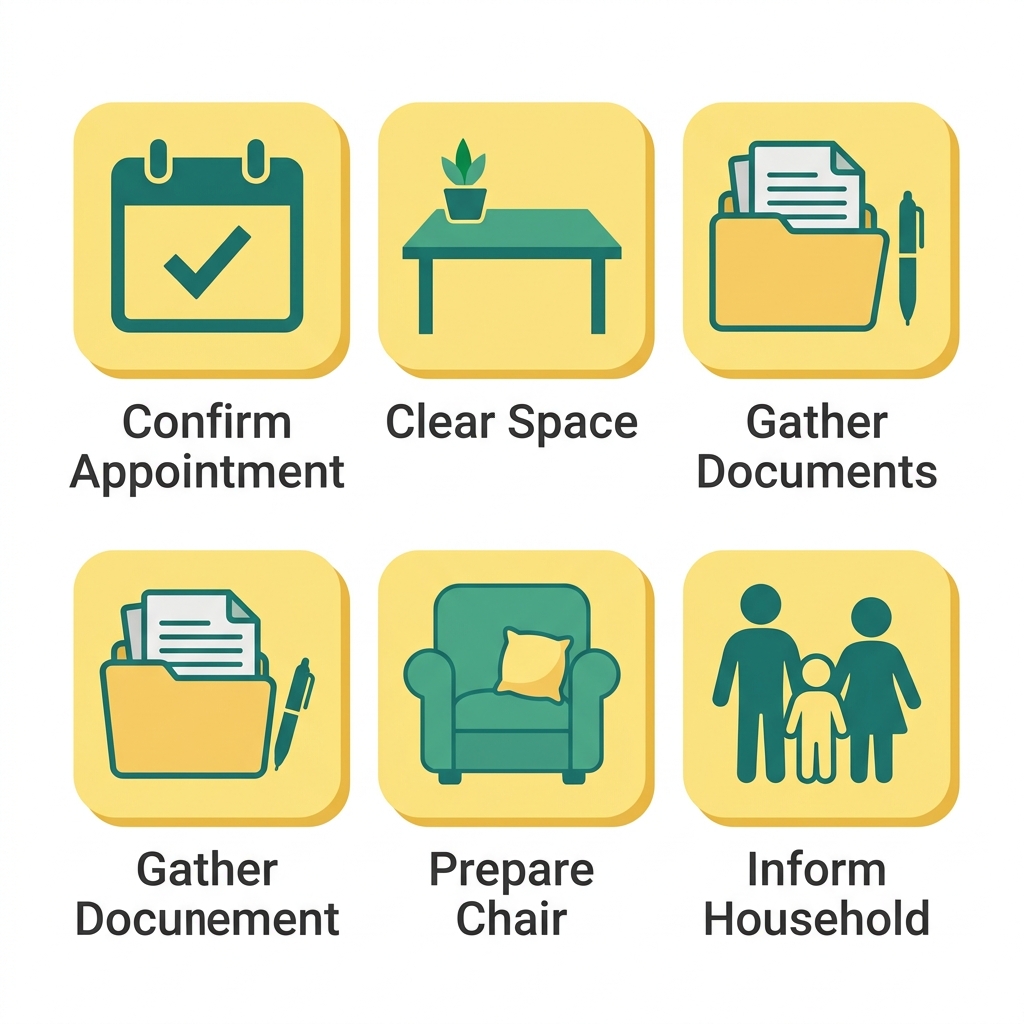
- Confirm the appointment time, so you and your family are ready when our team arrives.
- Clear a space for the team to work, such as a table in a quiet room, and remove clutter.
- Gather any documents, including medication lists and insurance cards, for easy access.
Why It Matters
This initial visit sets the tone for the entire care partnership, builds trust, allows our interdisciplinary team to assess your loved one’s needs efficiently, and immediately activates your support system—including our 24/7 response team.
Tips
- If pets may distract, place them in another room.
Troubleshooting: Overcoming Common Preparation Hurdles
Having to take your loved one to their first hospice visit can be emotional as well as worrying. It is absolutely normal to feel uncertain about what’s ahead of them, but we’re here to help. Our interdisciplinary team, comprised of nurses, social workers, and chaplains, will guide you and answer any questions that come up along the way.
- Nervousness about what to expect. Write down every question that comes to mind — no concern is too small. Our social workers and chaplains are available to talk through your feelings and help you feel more grounded before the first visit.
- Logistics and paperwork. Coordinating schedules, understanding forms, or getting the home ready can feel heavy. Reach out to our dedicated 24/7 response team ahead of time; we will walk you through what is needed so you are not handling it alone.
- Family members who are unsure. If someone in the family has doubts about hospice support, an open conversation can help. We can also arrange a family meeting with one of our social workers, who will listen, answer questions, and guide everyone toward a shared understanding.
If these obstacles have been cleared, you’ll feel some reassurance that all is well. With the right supports in place, you can shift your focus toward the comfort, companionship, and skilled care that will surround you throughout the journey ahead.
Frequently Asked Questions
What documents and information should I have ready for the first hospice home visit?
You should have a signed Hospice Election Statement, a current medication list showing each drug, dosage, and time taken, copies of advance directives such as a living will or durable power of attorney, a photo ID, and all active insurance cards ready. This documentation allows the clinical staff to confirm eligibility and immediately assess your loved one’s current health situation.
How can I set up a comfortable and safe environment in the home for a hospice patient?
Set up a safe and comfortable environment by removing throw rugs and securing electrical cords to prevent falls. Rearrange furniture to create clear pathways for mobility aids and soften lighting to reduce glare. Use nightlights in halls, bathrooms, and bedrooms, install grab bars near the toilet and shower, and label rooms with words or pictures to assist with cognitive changes.
What questions should family members ask during the initial hospice home visit?
Family members should ask who will be on the interdisciplinary team and what role each person plays, how to access the after-hours response team for urgent concerns, and what pain management philosophy guides the care plan. Additional topics include how the family can participate in daily routines and stay updated, and how often visits from the team will occur.
How do I prepare for the hospice team’s arrival and the transition to in-home care?
Prepare for arrival by confirming the appointment time and clearing a workspace, such as a table in a quiet room, for the team. Gather your documents, medication lists, and insurance cards for easy access. Emotionally, encourage family members to discuss fears and hopes openly, practice self-care like a walk or a shared meal, and explore the available bereavement counseling resources.
What household items or supplies should I keep on hand for the hospice nurse’s visit?
Keep disposable gloves, gentle cleansing wipes, a digital thermometer, and a pill organizer on hand. Have any prescribed durable medical equipment already in the home ready, along with incontinence products if they are in use. Keep each prescription in its original bottle and place an updated medication list where the team can easily see it, such as on the refrigerator or a bedside table.
Embrace Your Hospice Journey with Full Support
Cherish Hospice surrounds every patient and family with a compassionate interdisciplinary team that includes doctors, nurses, social workers, and chaplains, ensuring physical, emotional, and spiritual needs are addressed. There is also a 24 hour/7 day per week dedicated response team available for hands-on care and emergencies.
We accept Medicare, Medicaid, and private insurance plans, and we serve families in Ohio and Indiana. We also provide bereavement support for loved ones. After learning how to prepare for a home health visit, our staff will guide you each step of the way. Patients may discontinue hospice services at any time, and hospice care focuses on comfort rather than cure. Results vary based on individual conditions; please consult a healthcare professional for personalized advice. Protected health information is handled in accordance with HIPAA and other privacy laws.
If you’re ready for hospice care with our complete support then please contact us at (937) 355-7154 or via e-mail: info@cherish-hospice.com. Our goal is to provide you with attentive listening as well as assistance in any way we can.
Connect with Cherish Hospice
Now that you understand how to prepare for a home health visit, you’re ready to embrace the compassionate support our hospice provides. From organizing documents to creating a safe home environment, you’ve laid the groundwork for a smooth first visit. Our interdisciplinary team, including nurses, social workers, and chaplains, is here to guide you every step of the way with 24/7 availability. Learn more about our full range of services, from pain management to alternative therapies like Cherish Touch and pet therapy. Your family’s comfort and peace of mind are our greatest priorities. Explore our services today to see how we can support your journey.