
Community-Based Palliative Care Programs: Complete Guide for Families
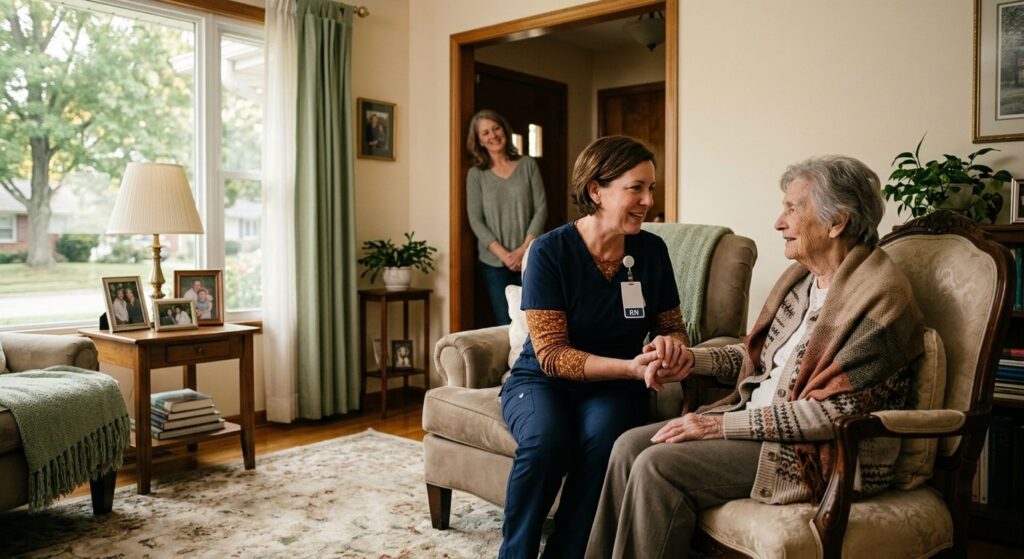
Table of Contents
- Compassionate Palliative Care Serving Ohio and Indiana Communities
- How Palliative Care Differs from Hospice
- Receiving Curative Treatment Alongside Palliative Care
- Community-Based Palliative Care Programs
- In-Home Palliative Care Services and Insurance Coverage
- Advance Care Planning and Transitioning to Hospice
- Your Journey to Comfort and Support
Compassionate Palliative Care Serving Ohio and Indiana Communities
Our community-based palliative care programs are available throughout Ohio and Indiana. Our Cherish Hospice team is providing hospice care in Springfield, hospice care in Canton, and hospice care in Warsaw and the surrounding counties. Our team brings 24/7 care to the comfort of the patient’s home. We have a team of nurses and aides who create personalized plans of care to best manage the patient’s symptoms and preferences. We pride ourselves in the fact that care always matters to us at every step, big or small, in every minute of every day.
Many people tend to confuse palliative care with hospice care, and for good reason, as they do tend to overlap in several areas. Unlike hospice care, palliative care does not require a specific diagnosis of end-stage illness, and it can be initiated at any point in a serious illness. The goal of palliative care is to improve comfort and quality of life. Hospice care, on the other hand, is intended for the final months of a terminal illness.
How Palliative Care Differs from Hospice
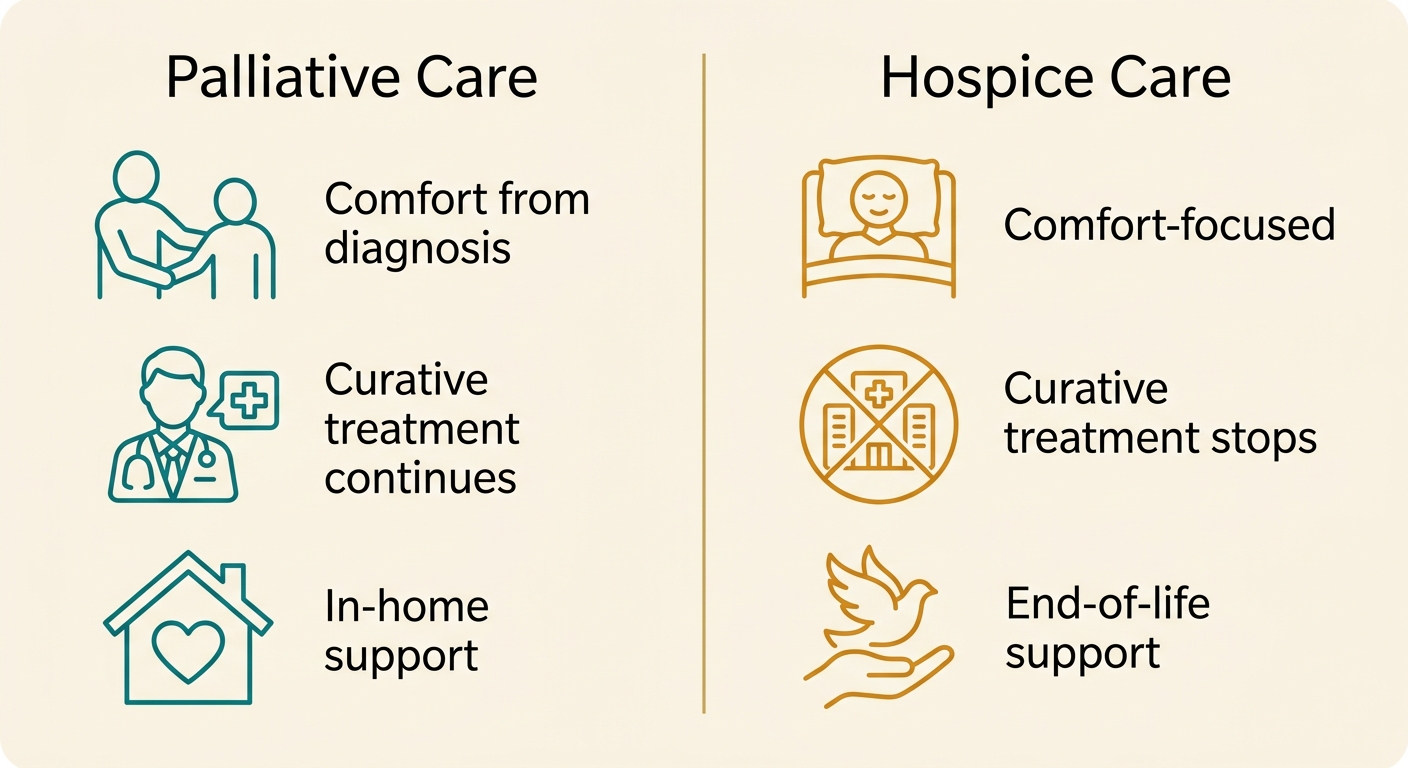
As we previously described, around-the-clock comfort care is a form of palliative care. However, it is important to distinguish between palliative care and hospice care. The focus of palliative care is on the physical, emotional, spiritual and social aspects of a patient. This service is offered at any stage, starting at the time of diagnosis. A patient is not required to discontinue medical or other treatment.
Hospice care is a program of palliative care for patients in the last stages of their illness. A physician confirms the terminal illness and expects the patient to live less than 6 months. The focus of hospice care is comfort and quality of life of the patient and family. It is understood that the illness is terminal; we cannot change the outcome, and the patient chooses to focus on comfort and quality of life rather than curative treatment. Hospice care has certain admission and discharge criteria.
| Aspect | Palliative Care | Hospice Care |
|---|---|---|
| When it begins | At any stage of a serious illness, from diagnosis onward | After a physician certifies a terminal illness with a prognosis of six months or less |
| Goal of care | Symptom relief and stress reduction while continuing treatment | Comfort and quality of life without curative intent |
| Curative treatment | Continues alongside palliative care | Not pursued |
| Who qualifies | Any person with a serious illness, regardless of age or stage | A person with a physician-certified terminal illness |
Palliative care is available from the time of the patient’s diagnosis. Hospice care is available when curative therapies are no longer the focus.
In Ohio and Indiana, for patients not yet eligible for hospice care, the Cherish Bridge program offers monitoring and nurse-led support. The in-home palliative care program is available in Clark and Montgomery counties in Ohio and in Elkhart and St. Joseph counties in Indiana.
Receiving Curative Treatment Alongside Palliative Care
We’ve already established that hospice care provides comfort when curative treatment is no longer the path forward. Palliative care, by contrast, can begin right at the moment of a serious diagnosis and walk alongside every treatment a patient chooses to pursue. You do not have to stop chemotherapy, surgery, or rehabilitation to receive the relief and support a palliative team can bring.
Starting as early as the first conversations about an illness such as advanced heart failure, cancer, or COPD, a palliative care team works shoulder to shoulder with your current doctors, your oncologist, cardiologist, or surgeon, to manage the side effects that often drain energy and hope. Our nurses, physicians, social workers, chaplains, and hospice aides coordinate symptom control so that pain, nausea, shortness of breath, and fatigue don’t overshadow the life you are still living. We see our role as an extra layer of guidance, never a replacement for the specialists you trust.
Because comfort shouldn’t be tied to one building, palliative care can show up wherever you feel most at ease. It can be delivered in your own living room in Springfield, in an assisted living setting in Canton, or even during a hospital stay in Warsaw. This flexibility means the support moves with you, keeping your physical and emotional well-being at the center no matter how your treatment location changes.
For seniors, advance care planning becomes a natural part of the conversation while treatment is still very active. We help you and your family think through future decisions, document your wishes, and make sure your voice is heard—all without asking you to give up on the care you are already receiving. Knowing that a plan is in place often relieves anxiety for both the patient and the people who love them.
We know that the disease may not be curable, but we can affect the journey. Day by day, we help people stay present for birthday gatherings, quiet morning coffee, and the laughter that serious illness cannot erase. These palliative services are woven into community-based programs right here in Ohio and Indiana, so you can keep both your treatment team and your comfort team close to home.
Community-Based Palliative Care Programs
For patients still undergoing curative treatment, palliative care no longer has to mean a hospital stay. Community-based palliative care programs deliver coordinated care right where people live, whether that’s a private residence, an assisted living community, or a long-term care facility, so patients remain in familiar surroundings while receiving support. We manage symptoms, adjust medications, and guide families through the illness journey without frequent hospital visits, and our interdisciplinary team meets regularly to adapt care as needs evolve.
Our teams consist of registered nurses, hospice aides, social workers, chaplains, bereavement counselors, and volunteers. Our nurses and physicians work together to make changes to the patient’s medications to help manage the symptoms. Aides assist with activities of daily living. Social workers and chaplains offer support with the emotional and spiritual aspects of the symptom management. Volunteers offer their time to socially engage with the patient, and bereavement counselors offer support to families as they adjust to a new normal.
An important feature of community-based palliative care is the availability of clinical support and guidance 24/7. Our response team is available at all times to manage unexpected or new symptoms of a patient. We work very closely with the patient’s medical team to further align and simplify the patient’s overall care plan to help with family understanding and clarity as they make important decisions for the patient and to best manage the patient’s symptoms.
Community-based care provides symptom management for those undergoing treatment for serious illnesses, including cancer and heart disease. It enables patients to maintain curative treatment and pursue a comfort-focused approach to care. In addition, we provide support to families. This includes spiritual and emotional support as well as bereavement care. We treat your family like our own, offering guidance through every stage of the illness and beyond.
Many patients are supported in assisted living and long term care facilities. However, we are observing an increasing number of families opting to bring care into the home. The shift to home-based care has created an increased need to better inform families about support services available to them. We help address these needs.
In-Home Palliative Care Services and Insurance Coverage
The same comfort-focused, whole-person philosophy that defines community-based palliative care extends naturally into the home when our team delivers support across Ohio and Indiana. In-home palliative care relieves pain and other symptoms for anyone facing a serious illness, and it can begin at diagnosis and continue alongside curative treatment, a key distinction from hospice. Our clinicians coordinate with primary doctors and local community resources to maintain continuity of care in patients’ homes. We can also guide families toward available veteran-focused programs and benefits.
Our in-home palliative services include:
- Individualized pain and symptom management guided by your goals
- Skilled nursing visits for monitoring and clinical coordination
- Daily living assistance and hospice aide support to ease the burden at home
- A 24/7 dedicated response team available to families for immediate questions and urgent needs
The Bridge Program gives early, comfort-focused, in-home care and nursing education to those who are not eligible for hospice, and helps them manage symptoms and stay as well as possible while continuing curative treatment.
Coverage varies: Medicare Part B and the Medicare Hospice Benefit may apply; Medicaid and private plans differ by state. Palliative care services are covered by most VA benefits plans. Because each plan is different, we can help you understand your plan and what your benefits are at no cost to you.
When you become aware of the services and supports provided by palliative care and understand how our team works to engage your benefits, it helps you plan for other resources such as advance care planning and helps with your eventual transition to hospice care.
Advance Care Planning and Transitioning to Hospice
After palliative care starts, families want to prepare to ensure their loved one gets the support they need and that their wishes are documented. Advance care planning is a continuing discussion about the medical treatment someone wants or does not want in a situation where they are not able to communicate it for themselves. This involves the creation of a living will or a document describing the treatment preferences, and a power of attorney for healthcare, where someone is appointed to make decisions on their behalf. These documents are modified according to changes in the preferences and priorities of the individual. These also give the individual, family members and the care team peace of mind.
We suggest that the families have these conversations well in advance of a medical emergency. Talking about the things that are most important to you like being at home and having your dignity and comfort at the end of your life can help provide peace of mind that your wishes will be respected. It also relieves the burden on your family to make quick decisions at the end of your life. We can help you talk to your family about these things, and help you fill out the necessary papers.
When a physician determines that a life-limiting condition is no longer responding to curative treatments, they may issue an order for hospice care. This starts a smooth, coordinated process. Our hospice team works directly with the patient’s current doctor to arrange a seamless transition—beginning care within hours of a referral. From that first call, a nurse and other clinicians visit to assess needs and put a personalized plan in place, managing pain and symptoms so your family can focus on being together.
For patients whose condition doesn’t yet meet hospice eligibility criteria, our Bridge Program provides supportive care that fills the gap. It’s a way to stay connected with our clinical staff, receive education about your illness, and access local community-based palliative care resources that offer extra layers of comfort and monitoring. When the time is right, the Bridge Program eases the shift into full hospice care without having to start over.
Throughout the process, our 24/7 dedicated response team is available to assist and answer any of your questions. Whether you are trying to determine what options are available to you, or you are in the process of receiving care, our team strives for excellence. Advance planning, transitions, and the Bridge Program all reflect our commitment to that guidance.
Your Journey to Comfort and Support
Now that we’ve learned about advance care planning and transitioning to hospice, it’s time to talk about how to incorporate these decisions into your loved one’s everyday life, and how to provide support through this process. This is about cherishing every moment, and this is our goal as well. Our staff is available 24 hours a day, 7 days a week, to provide support and help with symptom management. You don’t need to do this by yourself. We understand the stress that this is causing your family, and we are here to help.
Important: Results may vary based on individual patient conditions. Please consult with a healthcare professional for personalized medical advice. Protected health information (PHI) will be handled in accordance with applicable privacy laws (HIPAA). Patients may discontinue hospice services at any time; hospice care focuses on comfort rather than cure.
We warmly invite you to contact our care team at (937) 355-7154 to ask questions or begin care, and discover comfort through community-based palliative care programs.
Connect with Our Care Team
This guide walked you through how community-based palliative care programs deliver comfort and expert support right where you live. At Cherish Hospice, we provide that same compassionate care to families in Ohio and in Indiana, with a 24/7 response team and individualized pain and symptom management. Our Bridge Program helps patients who don’t yet qualify for hospice get the education and monitoring they need. We can also help you navigate advance care planning and the transition to hospice with patience and understanding. You can call us at (937) 355-7154 to talk through your situation, there’s no pressure, just genuine conversation. We believe care always matters, and we’re here to show you what that looks like. We offer compassionate local services, including 24/7 response and individualized symptom management.
Resources
- Obtenga servicio experto de reparación Thermador
- Reparación de rangos Thermador con expertos certificados
- Obtener servicio de reparación Thermador confiable
- Servicio profesional de reparación de rangos Thermador
- Reparación rápida y confiable de estufas Thermador
- Expertos en reparación de rangos Thermador con garantía
- Obtener reparación experta de rangos Thermador hoy
- Reparación Thermador con técnicos certificados y confiables
- Servicio de reparación de rangos Thermador certificado
- Reparación de rangos Thermador por expertos certificados