

Table of Contents
- Hospice Care for End-Stage COPD: A Compassionate Path Forward
- Understanding Hospice Eligibility for End-Stage COPD
- How Hospice Manages COPD Symptoms and Comfort
- Recognizing the Right Time to Transition to Hospice
- Coordinating Oxygen Coverage, Care Settings, and Ongoing Support
- Common Questions About Hospice for End-Stage COPD
- Care That Matters for Your Family
Hospice Care for End-Stage COPD: A Compassionate Path Forward
When a loved one needs hospice for end-stage COPD, it means choosing comfort-focused care designed for a terminal prognosis of six months or less. This option supports families as advanced breathing challenges intensify, offering symptom management and emotional support tailored to the unique needs of end-stage lung disease. Hospice care is not about giving up; it’s about providing dignity, comfort, and compassionate support when curative treatment no longer aligns with a family’s goals.
It’s tough watching advanced COPD take away someone you love’s ability to breathe, to be independent. But hospice isn’t about giving in; for families facing a terminal diagnosis, it’s about making them as comfortable as possible and offering love, compassion, and dignity through quality-of-life support instead of curative medical therapy. Hospice will give both the caregiver and the patient needed support when breathing becomes difficult day-by-day.
This article outlines hospice care for end-stage COPD patients. It explains when hospice care services should commence, which type of support is available, and discusses when your loved one might become eligible, including warning signs that indicate when they need assistance more actively, what activities take place in a day at their hospice bedside, and how you might begin making preparations now as their disease takes hold.
Key Takeaways
- If your family is supporting someone who has end-stage COPD, you may be wondering about hospice care eligibility.
- Once a loved one qualifies for hospice with end-stage COPD, families often wonder what day-to-day comfort care actually looks like.
- Even with attentive symptom management, families often notice subtle shifts that signal a loved one may benefit from comfort-focused care.
- After deciding on hospice care, families are frequently concerned about the logistics of their situation – especially what they have to arrange and pay for in order to get oxygen at home.
- Some family members ask how long someone has left if they need hospice care for end-stage COPD.
Understanding Hospice Eligibility for End-Stage COPD
If your family is supporting someone who has end-stage COPD, you may be wondering about hospice care eligibility. Hospice is there for patients whose lives will end within six months or less, as stated in Medicare’s Local Coverage Determination rules, according to two doctors. Hospice focuses mainly on comfort and symptom management to make sure that these patients have dignity and quality of life when curative treatment is no longer the goal.
Physicians evaluate eligibility by examining clinical decline and functional markers. They look for signs such as unintentional weight loss exceeding 10% over six months, frequent hospitalizations for the same condition, or spending more than 50% of waking hours bed-bound. Recurring infections like pneumonia or urinary tract infections, along with a diagnosis of adult failure to thrive, also signal the need for hospice-level support. These indicators help doctors determine whether a patient’s condition aligns with the typical trajectory of end-stage COPD, guiding families toward informed decisions about care transitions.
Hospice vs. Palliative Care for COPD Patients
| Aspect | Hospice Care | Palliative Care |
|---|---|---|
| Focus | Comfort-focused care when curative treatment is no longer the goal | Comfort care that can accompany curative treatment |
| Eligibility | Terminal prognosis of six months or less certified by two physicians | Not tied to a six-month prognosis |
| Family support | Bereavement and grief counseling, emotional and spiritual support | Supportive care alongside medical treatment |
Hospice care is only offered when there is a terminal diagnosis, but palliative care can be given throughout the course of a serious illness, even if treatment continues. Hospice care often includes round-the-clock clinical support, medical equipment, and up to a year of bereavement counseling.
Recognizing readiness signals can ease the decision-making process. Families should watch for two or more hospital stays within six months for COPD-related issues or a loved one spending over half of their waking hours confined to bed. These signs often indicate that comfort-focused care could provide the greatest benefit. Once eligibility is confirmed, our team typically initiates services within 24 to 48 hours after a successful referral.
We cannot change the outcome, but we can ensure every moment is filled with comfort, dignity, and support. If you’re unsure whether hospice for end-stage COPD is right for your loved one, our compassionate team is here to answer your questions and guide you through the process.
How Hospice Manages COPD Symptoms and Comfort
Once a loved one qualifies for hospice with end-stage COPD, families often wonder what day-to-day comfort care actually looks like. Our team focuses on managing the physical and emotional symptoms that matter most, so every breath and moment feels as gentle as possible. We provide hands-on support through individualized plans, 24/7 response teams, and therapies designed to ease discomfort and bring moments of peace.
How Hospice Addresses Common End-Stage COPD Symptoms
| Symptom | Hospice Approach |
|---|---|
| Shortness of breath (dyspnea) | Individualized symptom management directed by our Medical Director to reduce discomfort and improve breathing comfort |
| Anxiety and restlessness | Team-led emotional support, presence, and calming therapies to help ease tension |
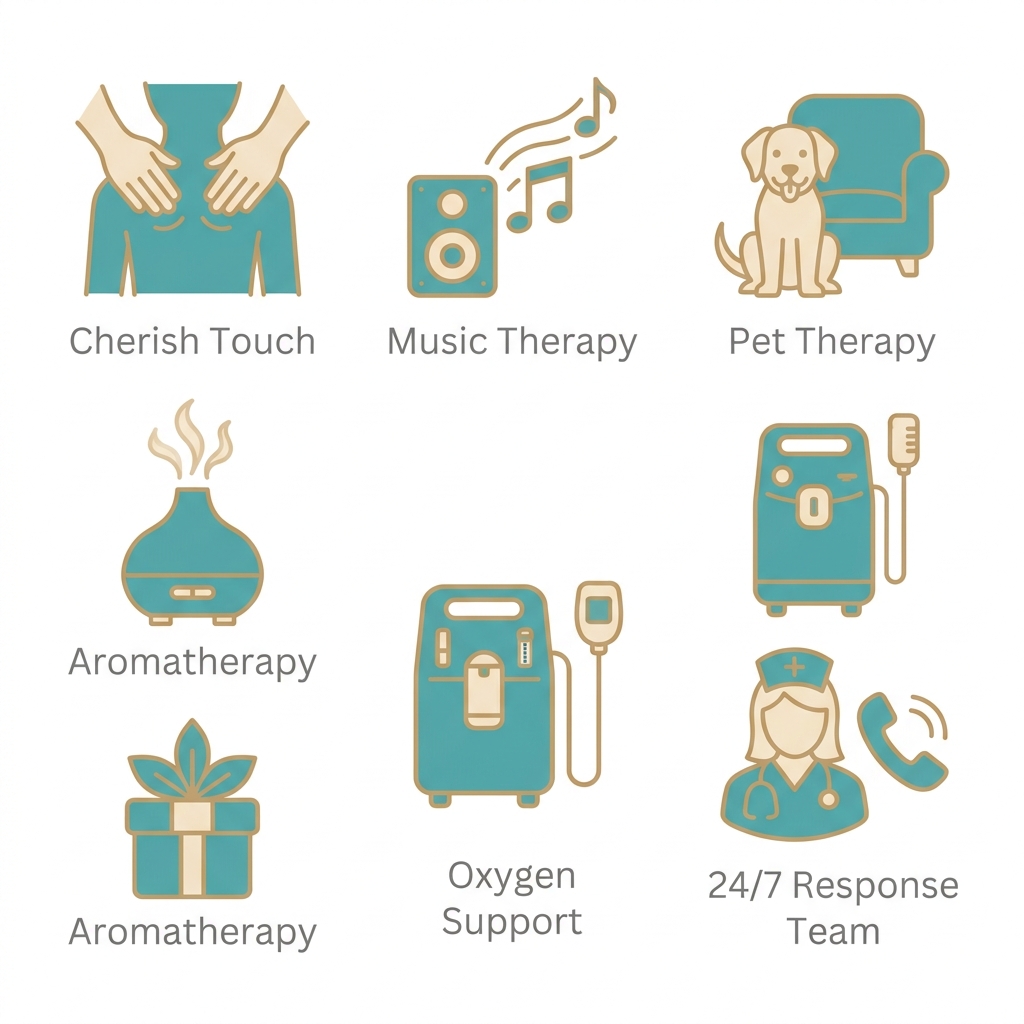
| Discomfort and tension | Cherish Touch, aromatherapy, music, and pet therapy to soothe body and mind |
| Urgent symptoms at any hour | 24/7 dedicated response team ready to provide hands-on care and rapid clinical support whenever needed |
It starts with knowing that each person who has COPD experiences their illness differently. Whether it’s adjusting medications, repositioning, or simply being present, we tailor every intervention to bring them relief and dignity.
Managing Dyspnea, Anxiety, and Breathlessness
At the beginning, we listen to what our patients tell us about their breathlessness, their anxiety, their needs. Our Medical Director oversees individualized symptom management, working closely with skilled nurses to adjust comfort measures in real time. Oxygen levels, positioning, and breathing techniques are all part of the conversation, ensuring every intervention feels right for the person we’re caring for.
Many patients suffering from anxiety also have breathlessness. Our clinicians use both physical as well as non-invasive therapeutic treatments such as Cherish Touch and aromatherapy. They assist in bringing about a sense of peace and tranquility to a patient’s body and mind allowing them to relax during their session despite their difficulties with breathing.
Continuing Oxygen Therapy Under Hospice Care
Sometimes families question whether or not oxygen can be used when hospice services begin. No problem. Medicare covers home oxygen equipment and supplies if you meet the clinical criteria. Your doctor would need to tell you if your oxygen level was low enough for it to help, and they have to make sure you’re getting oxygen from an equipment company that takes Medicare payments and agrees to assign its payment rights to Medicare.
Part b oxygen equipment is rented for 36 months, and supplies like tubing & masks are covered for up to five years. Once you meet the part B deductible, you’ll typically pay 20% of the approved amount for equipment.
Holistic Comfort Therapies for COPD Patients
In addition to providing medical care, we provide various kinds of support for each part of their bodies and souls. The Cherish Touch program offers gentle, hands-on comfort through light massage and presence. Music therapy involves familiar songs which make our minds feel at ease as well as uplift us emotionally. Pet therapy brings our patients gentle companionship from trained animals. Finally, we provide aromatherapy to help relax tense muscles.
These therapies are woven into each patient’s care plan, never as a cure, but as moments of comfort that can make the journey gentler. The 24/7 response team at our facility can be reached around the clock should someone need the physical help offered.
Recognizing the Right Time to Transition to Hospice
Even with attentive symptom management, families often notice subtle shifts that signal a loved one may benefit from comfort-focused care. When end-stage COPD calls for hospice, the transition begins with recognizing the physical signs of decline that indicate a shift from curative treatment to quality-of-life priorities.
Physical Signs That Signal Hospice Readiness
This decision does usually not happen out of nowhere though there are various signs to suggest a terminal condition has become evident. To be eligible to receive hospice care, a patient will require at least two doctors to agree that the life expectancy from that date onwards will only last around half a year. These include unintentional weight loss of 10% or more over six months, two or more hospital stays within six months for the same condition, spending over 50% of waking hours bed-bound, or recurrent infections such as pneumonia. Each of these signs reflects a weakening resilience that often signals the need for the specialized support hospice provides.
| Indicator | What It Suggests |
|---|---|
| Unintentional weight loss of 10% or more | Significant physical decline that may indicate the body is no longer able to maintain itself without additional support |
| Two or more hospital stays within six months for the same condition | Recurring crises that suggest comfort-focused care may better serve the patient’s needs than repeated acute interventions |
| Spending over 50% of waking hours bed-bound | Advanced functional decline where mobility and daily activities become increasingly difficult |
| Recurrent infections such as pneumonia | Weakening immune response typical of terminal progression, increasing vulnerability to complications |
Once a referral is made, our team typically begins care within 24 to 48 hours, ensuring families receive timely support during this challenging transition.
How the Bridge Program Supports Patients Not Yet Eligible
For patients whose condition hasn’t yet met formal hospice or palliative criteria, our Bridge Program offers a compassionate bridge to future care. This program provides early nursing guidance, disease management education, and advance directive counseling while monitoring the patient’s condition closely. By addressing questions early and helping families plan ahead, we walk with your family like our own through uncertain times, ensuring no one feels left without answers or support. The program also helps families prepare emotionally and practically for the possibility that hospice may soon become the right choice.
Support for Families Before and After Loss
Our promise goes beyond when a loved one passes. We provide ongoing emotional and social support, spiritual care tailored to individual beliefs, and bereavement counseling for at least one year post-loss. Our volunteers can also create memory books or add family photos. Whatever you may be going through, whether you just need someone to listen, help guide you through grief or merely want another friend to sit beside you quietly during sad times, we’re here for you all along the way.
Coordinating Oxygen Coverage, Care Settings, and Ongoing Support
After deciding on hospice care, families are frequently concerned about the logistics of their situation – especially what they have to arrange and pay for in order to get oxygen at home. Home oxygen equipment qualifies as durable medical equipment under Medicare Part B if a doctor says a patient has low oxygen and indicates that oxygen would help them feel better. We work with doctors, suppliers and families to make sure all aspects of the patient’s care plans take into account these oxygen needs.
Under Medicare home oxygen coverage there is a 36-month rental period for equipment such as concentrators and portable tanks, with supplies, like tubing and storage containers, covered for up to five years. Following the Medicare Part B deductible, you usually pay 20% coinsurance on the Medicare-approved amount. If applicable, you will also have maintenance coinsurance semiannually once your initial rental time has passed.
Families should choose an enrolled supplier who accepts assignment. And suppliers cannot change equipment types without an updated doctor’s order. In this way it ensures coverage stays in place and avoids unexpected costs.
| Coverage Detail | What Families Should Know |
|---|---|
| Coverage requirement | Doctor-confirmed insufficient oxygen levels with likely health improvement |
| Equipment rental period | 36 months of rental; supplies covered up to five years |
| Cost sharing | 20% coinsurance of the Medicare-approved amount after the Part B deductible; possible maintenance coinsurance every six months after the rental period |
| Supplier obligation | Must be an enrolled supplier accepting assignment; no equipment changes without an updated doctor’s order |
With oxygen in place, patients continue to receive care through our 24/7 dedicated response team and skilled palliative care that is covered under your Medicare home health benefit. They’ll work to control their symptoms and be there to help keep them comfortable while family members concentrate on their loved one’s needs. Please give us a call if you’d like information concerning our oxygen benefits and how we help provide comfort for end-stage pulmonary disease.
Common Questions About Hospice for End-Stage COPD
Some family members ask how long someone has left if they need hospice care for end-stage COPD. There are two physicians who must confirm that your loved one has a final prognosis of approximately six months, but this isn’t always measured precisely. These signs include frequent trips to the hospital, unintentional weight loss of over 10%, and being confined to bed more than half the time while awake, which can signal readiness for hospice.
Our team usually starts taking care of the patient in 24-48 hours following a referral, always focused on providing comfort and support only. Some people might get confused about hospice vs palliative care: hospice is exclusive for terminally ill patient while palliative can be given along side of curative care.
We’re here to answer your questions and guide you step-by-step through this journey with compassion and clarity.
Frequently Asked Questions
What are the clinical criteria for hospice eligibility for end-stage COPD patients?
Hospice eligibility for end-stage COPD requires two physicians certifying a terminal prognosis of six months or less. Indicators include unintentional weight loss of 10% or more over six months, two or more hospital stays within six months for the same condition, spending over 50% of waking hours bed-bound, or recurrent infections such as pneumonia. These signs reflect advanced functional decline typical of end-stage lung disease.
How does hospice care help manage the symptoms of end-stage COPD?
Hospice care manages end-stage COPD symptoms through individualized plans directed by the Medical Director, 24/7 dedicated response teams, and therapies like Cherish Touch, aromatherapy, music, and pet therapy. The focus is on reducing discomfort, easing anxiety, and improving breathing comfort while providing round-the-clock clinical support.
When is the right time to transition a loved one with COPD to hospice care?
The right time to transition to hospice is when a loved one shows clinical decline such as unintentional weight loss, frequent hospitalizations, spending over half of waking hours bed-bound, or recurrent infections. Once eligibility is confirmed, care typically begins within 24 to 48 hours after a successful referral.
Can a patient continue to receive oxygen therapy while enrolled in hospice for COPD?
Yes, patients can continue oxygen therapy under hospice if clinically indicated. Medicare covers home oxygen equipment and supplies when a doctor confirms low oxygen levels and prescribes oxygen for symptom relief. Suppliers must be enrolled and accept assignment to ensure coverage.
What support does hospice provide for families of patients with end-stage COPD?
Hospice provides families with spiritual and emotional support, bereavement counseling for at least one year after loss, volunteer services like memory books and pet therapy, and guidance through the Bridge Program for those not yet eligible. Support is tailored to individual needs and available 24/7.
Care That Matters for Your Family
No one should bear the pain of COPD in its most severe form alone, and our medical staff stands at their side throughout your journey. We treat them and support you as well, keeping your family calm in the process.
We will produce individualized care plans in association with our Medical Director and supply all-round 24/7 support, which includes nursing and daily living assistance. We also provide at least a year’s bereavement assistance to help them get through this tough time.
If you’re ready to explore hospice care for end-stage COPD, reach out to our team today.
Talk With Our Caring Team
You now understand how hospice eligibility works for end-stage COPD, from the six-month prognosis certification to the signs families can watch for, like frequent hospitalizations and spending most waking hours bed-bound. You also know what comfort care looks like day to day, including continued oxygen therapy and around-the-clock symptom support. If any of these signs feel familiar, a simple conversation can bring real clarity to your family’s situation. At our hospice, we walk with families in Springfield, Ohio and across our service area, offering individualized care plans, a 24/7 response team, and bereavement support for at least a year after loss. Choosing comfort-focused care is an act of compassion, not giving up. Call us at (937) 355 – 7154 or reach out through our contact page with your questions. We are ready to listen and help you take the next step at your own pace.