
Hospice Alternative Therapies Pet Therapy: Comfort at Home
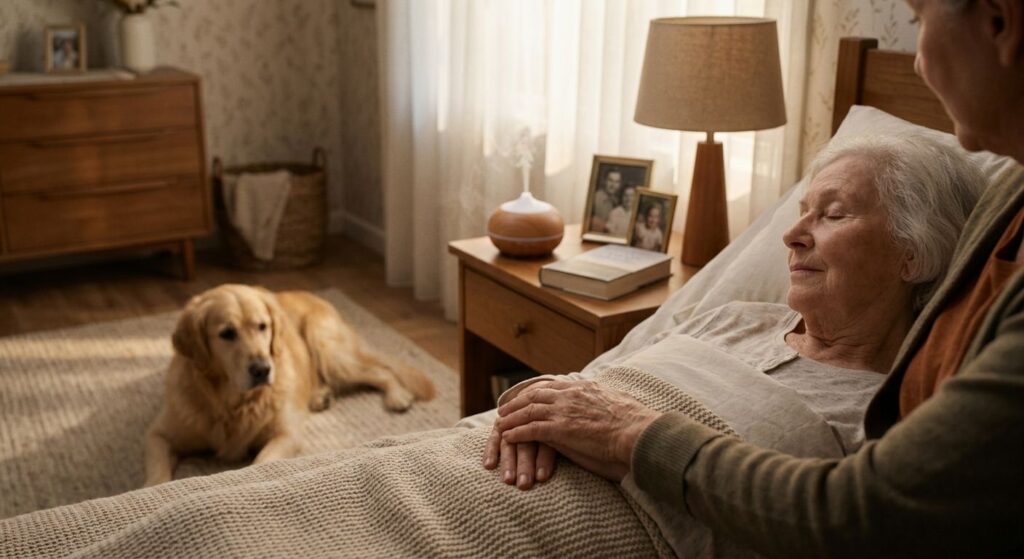
Table of Contents
- At-Home Bedridden Care Enhanced by Alternative Therapies
- Understanding Bedridden Care and the Role of Alternative Therapies
- Exploring Pet Therapy, Touch, and Aromatherapy for End-of-Life Comfort
- How to Implement Alternative Therapies in Your Home Care Routine
- Advanced Strategies for Integrating Therapies into Complex Care Plans
- Common Questions About Hospice Alternative Therapies
- Empowering Caregivers: The Journey Ahead with Cherish Hospice
At-Home Bedridden Care Enhanced by Alternative Therapies
When families first hear about hospice alternative therapies including pet therapy, they often wonder how these gentle interventions can make a meaningful difference for a bedridden loved one. At Cherish Hospice, we believe that care always matters, and we weave that belief into every moment of support we provide.
We are fortunate to provide care in the home. This brings a sense of security for the patient and family. Being in the home can mean the patient is surrounded by familiar sounds, scents, and the presence of loved ones. We work to preserve that homelike feeling while bringing professional, compassionate care directly to the bedside. For someone who is bedridden, those familiar cues can ease anxiety and foster a sense of peace.
We complement skilled nursing and daily assistance with alternative therapies designed to soothe the body and lift the spirit. We utilize therapies such as Gentle Cherish Touch hand-and-arm massage, calming aromatherapy with essential oils, visits from our trained pet therapy companions, and Cherish Sounds—soothing music and nature recordings—to provide comfort to the patient without the need for invasive procedures.
After families see how these therapies are integrated with the big picture, they feel more at ease with the decisions they need to make. If the therapies are integrated with warmth, this helps shift the experience of being bedridden from being alone to connecting with the outside world.
Understanding Bedridden Care and the Role of Alternative Therapies
When a family member becomes bedridden, the priorities of the family change as well. The focus shifts to the person’s comfort and dignity and creating moments of peace in the family’s familiar surroundings. Families in Clark County and the communities we serve naturally wonder what truly compassionate care looks like when someone is bedridden and how to make each moment meaningful.
Ultimately, bedridden care is about being there and giving gentle, full attention to the person. Some of the essential elements of care that our staff focuses on to help achieve this are:
- Gentle turning and repositioning to ease pressure and maintain skin integrity, reducing the risk of discomfort or breakdown during long periods of rest
- Hydration and mouth care that nurture from the inside out, offering small sips, swabs, and the refreshing feeling that preserves dignity
- Pain and symptom management guided by our medical director, keeping your loved one as comfortable as possible through expert, round-the-clock oversight
- Emotional and spiritual presence that brings companionship to the bedside, whether through quiet conversation, hand-holding, or simply sitting together in the stillness
While the above-mentioned elements protect the body, a full philosophy of care also considers the spirit and the senses. This is where alternative therapies become a natural, gentle extension of the bedside experience. These therapies aren’t meant to replace medical treatment. Rather, they are complementary tools that honor the whole person.
While we cannot change the outcome, we believe we can change the experience. Because of this, we offer comforting therapies in hospice care that reach beyond traditional clinical interventions.
As an example, someone who is bedridden is unable to move about freely, but can still experience the soothing effects of touch therapy, calming sounds, or the support of the animal assisted therapy program for hospice patients.
These positive philosophy and practices continue with our Cherish Touch program, a bedside hand and foot massage therapy, and our Cherish Sounds program, which offers soothing music and the natural sounds of nature. We also include our specially trained companion animals in this practice through the pet therapy program, and round out our philosophy with the beneficial effects of essential oils through our aromatherapy program.
They remind us that while a body may be confined to bed, a person can still experience joy, connection, and profound peace. These gentle approaches are practical, compassionate tools that help families discover moments of beauty and serenity, even in the most tender days.
Exploring Pet Therapy, Touch, and Aromatherapy for End-of-Life Comfort
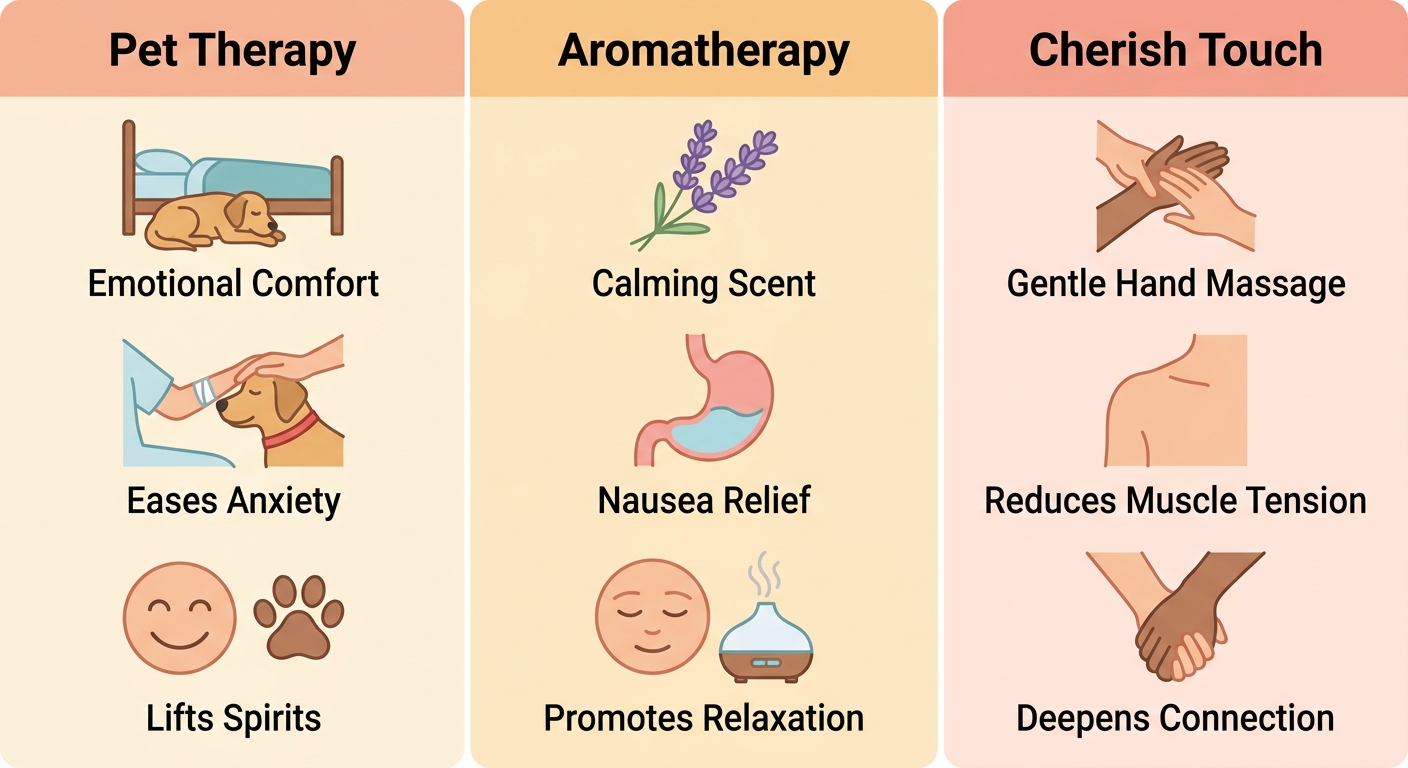
Among the alternative therapies that can bring comfort to bedridden hospice patients, three stand out for their research-backed benefits: pet therapy, aromatherapy, and the healing power of touch. At Cherish Hospice, we embrace and incorporate these therapies into our whole-person care plans, tailoring each to the unique needs and preferences of the individual.
The Science Behind Pet Therapy for Hospice Patients
Pet therapy brings trained animals to the patient for visitation. There are numerous benefits of pet therapy for palliative care. Stroking an animal can reduce stress hormone cortisol and increase oxytocin (the “bonding” hormone). It can slow the heart rate and lower blood pressure, which can help ease physical discomfort. If the patient is feeling anxious or lonely, the visit can provide comfort. We coordinate these visits carefully, screening for allergies or fear, and never force an interaction—patient comfort always comes first.
Aromatherapy: Soothing the Senses and Easing Discomfort
Aromatherapy harnesses the power of essential oils to engage our sense of smell, which is directly connected to the brain’s emotion and memory centers. We use lavender for relaxation, peppermint to help soothe nausea, and chamomile to alleviate anxious feelings. Essential oils can be diffused or diluted and applied to skin, but we assess the condition of the skin first. Fragile skin may not be able to tolerate mild application. Each person has different preferences. A scent that is soothing to one person may be overwhelming to another. We use our knowledge of aromatherapy to provide families a means to help incorporate it into a routine to honor comfort and respect the dignity of the patient.
The Healing Power of Touch: Cherish Touch and Massage Therapies
Cherish Touch is our own gentle, non-invasive hand-and-foot massage technique developed for bedridden patients across our service areas in Springfield, Ohio, Canton, Ohio, and Warsaw, Indiana. This light, intentional touch helps reduce muscle tension, improve circulation, and foster a deep emotional connection—even when a patient can no longer communicate verbally. Touch therapies like this engage the body’s natural relaxation response, offering pain relief and a sense of security. For family members, participating in a guided Cherish Touch session becomes a meaningful way to express love and presence. We teach caregivers simple techniques so that the healing power of touch can continue beyond our visits, turning quiet moments into profound acts of compassion.
Comparing Therapies: Choosing What Works Best for Your Loved One
When considering which complementary therapy to introduce, reflect on your loved one’s personal history and current needs. Pet therapy tends to resonate most with people who have always enjoyed animals and have no allergies or fears. Aromatherapy offers subtle sensory comfort without physical contact, making it a gentle choice for those with sensitive skin or limited mobility. Touch therapies, including Cherish Touch, provide the unique benefit of human connection and gentle physical relief, which can be especially valuable for patients who feel isolated. None of these therapies can change a diagnosis, but we can affect the journey by weaving their small comforts into each day. We are here to help you explore which options feel right and to support you in bringing these moments of peace to your loved one’s bedside.
How to Implement Alternative Therapies in Your Home Care Routine
Now that you understand the comfort these therapies can bring, here is how to put them into practice. Your loved one’s hospice team will help you choose complementary approaches that fit their medical needs and personal preferences.
How to Request Pet Therapy for Your Loved One at Home
We will connect you with our volunteer coordinator. You will complete a short request form, and our clinical staff must confirm that pet visits are medically appropriate for your loved one. Set up a quiet, clutter-free area where your loved one can interact comfortably.
Implementing Aromatherapy Safely in the Home Environment
Before using any essential oil, talk with your hospice nurse so the care team can confirm it is appropriate. If applying to skin, always dilute: use only 1–2 drops of essential oil per ounce of carrier oil such as almond or jojoba. Avoid oils that are too stimulating for elderly or bedridden individuals, including wintergreen, peppermint, eucalyptus, and tea tree. Run a diffuser for only 15–20 minutes while someone is present, and stop if your loved one shows any sign of discomfort or headache. Store all oils out of reach and follow any additional guidance your nurse provides.
Integrating Touch and Massage into Daily Care Routines
Hand massage: warm your hands and gently press the palm and each finger in slow, circular motions for a few minutes to promote relaxation. Shoulder rub: with the person seated or reclined, place your hands on either side of the neck and use soft, circular movements across the shoulders to relieve tension. Foot stroking: cup the heel and sweep toward the toes in a slow, steady rhythm, avoiding deep pressure over sore spots. Our hospice aides can demonstrate these techniques during a visit, and professional Cherish Touch sessions are available as part of the care plan when deeper relaxation is desired.
Steps to Access Hospice Alternative Therapies Through Cherish Hospice
Our team, “We treat your family like our own,” and we make it simple to access extra layers of comfort. Start by telling any member of our care team which therapies interest you. We verify coverage and discuss how each option fits the care plan. Next, we schedule a care-plan meeting to tailor the therapy to your loved one’s symptoms and preferences.
| Therapy Type | How to Access | Home Preparation | Frequency & Duration |
|---|---|---|---|
| Pet Therapy | Coordinate with Cherish Hospice volunteer coordinator; complete a request form and obtain care team approval. | Clear a quiet, clutter-free area. | Visits typically last 30 minutes, scheduled as needs and volunteer availability allow. |
| Aromatherapy | Discuss with hospice nurse; obtain recommended oils and dilution guidelines. | Use a cool-mist diffuser in a well-ventilated room; store oils securely away from the bedside. | Short sessions of 15–20 minutes, only when the patient is alert and interested. |
| Touch/Massage | Family caregivers can perform simple techniques after a demonstration from a hospice aide; professional Cherish Touch sessions arranged through the care team. | Warm hands and a comfortable position. | Gentle hand or foot massages for a few minutes daily; longer professional sessions scheduled as part of the care plan. |
We tailor each therapy to your loved one’s changing condition and keep safety and comfort at the center. Your hospice nurse remains your best source of guidance—never hesitate to ask questions or request a demonstration.
Advanced Strategies for Integrating Therapies into Complex Care Plans
Creating a consistent routine at home for alternative therapies is a good foundation for hospice care. For patients with multiple symptoms or quickly changing needs, more creative coordination is required. We integrate Cherish Touch, pet therapy, aromatherapy and Cherish Sounds as part of a flexible plan to respond to varying needs of our patients.
- Assessing the right combination: Our team begins by talking with the patient and family about physical pain, emotional distress, and spiritual preferences. We then match modalities—such as gentle Cherish Touch for anxiety relief, guided aromatherapy for nausea, or pet visits for comfort—to the individual’s most pressing needs.
- Scheduling for rest and responsiveness: We carefully stagger pet therapy visits with aromatherapy or music sessions, always leaving quiet rest periods between interventions. This prevents overstimulation and respects the natural ebb and flow of energy throughout the day, no therapy interrupts essential rest or medical care.
- Documenting and sharing observations: After each therapy session, our caregivers record the patient’s response—changes in mood, pain level, or alertness—and share those notes during interdisciplinary team huddles. This real-time feedback allows us to adjust the plan swiftly and keep everyone on the care team aligned.
- Involving family and extending support home: We invite family members to participate in Cherish Touch hand massages or to practice preferred aromatherapy routines. We also teach simple Cherish Sounds techniques that loved ones can continue between our visits, creating a seamless bridge of comfort.
- Adjusting as needs change: As the patient’s condition progresses, we review the therapy mix weekly—sometimes monthly—and ask open-ended questions: Is this still soothing? Could another modality now bring more relief? By staying flexible, we ensure the care plan remains truly person-centered without making promises about outcomes.
By weaving advanced strategies into our daily practice, we help individuals gain the full benefit of complementary therapies at every stage. This builds the families’ confidence with these approaches, and naturally leads them to wonder how different therapies interact and what to expect, questions we welcome and explore together.
Common Questions About Hospice Alternative Therapies
After exploring how these therapies fit into care plans, you may still have some common questions. What therapies do we offer? We offer comfort-focused alternative therapies such as Cherish Touch (gentle touch), Cherish Sounds (calming music), aromatherapy with soothing essential oils like lavender, and pet therapy with trained animals. How can animal visits help? Trained therapy animals lift mood and reduce isolation, offering joy and connection. Are these suitable for everyone? Not every therapy fits every patient. We tailor offerings to each person’s preferences and medical needs without pressure. Who provides sessions? Trained staff or volunteers deliver each therapy as part of the care plan. Talk with your care team about local availability. Understanding these details can help you feel more prepared and supported as you continue your caregiving journey with Cherish Hospice.
Empowering Caregivers: The Journey Ahead with Cherish Hospice
We know you have many questions about integrative therapies. As you explore them, just know that you and your loved one will never be on this journey alone.
Our individualized pain management, our team available 24/7, and our hospice alternative therapies such as pet therapy and Cherish Touch remain dedicated to providing your loved one with dignity, comfort, and quality of life. As mentioned previously, hospice care is all about comfort and quality of life, not a cure.
The team available 24/7 is here to talk and assist you whenever you’re ready.
Get Compassionate Hospice Support
Now that you understand how alternative therapies like pet therapy and Cherish Touch can bring comfort to a bedridden loved one, it’s time to explore how our team can put these into practice. Our team provides individualized care plans that integrate these gentle approaches with professional nursing. From aromatherapy to Cherish Sounds, we offer a full range of comfort measures to ease your loved one’s journey. With 24/7 availability, we are always here to answer your questions and provide hands-on support. You don’t have to navigate this alone—our compassionate professionals will guide you every step of the way. Reach out today to learn more about our services and how we can support your family in the comfort of home.