
Signs It’s Time for Hospice: Complete Guide for Families
Table of Contents
- Recognizing the Signs It’s Time for Hospice
- Understanding the Clinical Signs of Hospice Readiness
- How Early Recognition Benefits Patients and Families
- Practical Steps to Assess Hospice Readiness
- Having Compassionate Conversations About Hospice
- Making Informed Choices for End-of-Life Care
Recognizing the Signs It’s Time for Hospice
Understanding the signs it’s time for hospice can feel overwhelming, but knowing what to look for helps families make informed, compassionate decisions. At Cherish Hospice, we believe that care always matters, and we are here to guide you through these tender moments.
Several indicators may suggest a need for hospice. These include multiple emergency room visits or hospitalizations over a short period, noticeable and progressive weight loss, difficulty swallowing, and a general decline in the ability to perform daily activities like bathing or dressing. A key concept is adult failure to thrive, an overall state of functional decline where a person’s health and strength diminish despite medical interventions. Another signal, known as terminal restlessness, can manifest as agitation or confusion as the body’s systems begin to slow. Caregiver burnout is also a vital sign that a support plan needs to be re-evaluated.
A physician may estimate a prognosis of six months or less, which is a medical standard for eligibility, but it’s important to remember this is not a guarantee. We encourage open conversations with healthcare providers about symptom progression and care goals. Sometimes, a patient may not yet qualify for hospice; for families considering hospice and end of life care in Dayton, Ohio, our Bridge Program offers education and monitoring to provide support until the time is right.
We cannot change the outcome, but we can affect the journey. Once you recognize these signs, our team is ready to help you take the next step.
Results may vary based on individual patient conditions. Please consult with a healthcare professional for personalized medical advice.
Understanding the Clinical Signs of Hospice Readiness
Now let’s explore the specific clinical signs that indicate a patient may be ready for hospice. Recognizing the signs it’s time for hospice can help families make informed decisions during a deeply challenging period. These indicators fall into three main categories: physical decline, cognitive and emotional changes, and a syndrome known as adult failure to thrive. Understanding these signs allows you to seek the support your loved one deserves, always guided by a healthcare professional’s evaluation.
Physical Decline: The Body’s Signals
The body often communicates its needs long before words can. Key physical indicators include significant, unintentional weight loss and a persistent lack of energy that rest does not remedy. You may notice more frequent infections, such as pneumonia or urinary tract infections, which can become harder to fight off. A profound decrease in mobility is another strong signal; your loved one may become primarily bedbound or chairbound, needing full assistance with once-simple tasks. Notable changes in appetite and difficulty swallowing are also common. At Cherish Hospice, we believe care always matters, and observing these physical shifts is an important part of understanding how best to provide comfort and support.
Cognitive and Emotional Changes
Emotional and mental shifts can be just as telling as physical ones. You might see increased confusion or disorientation, where your loved one seems less aware of time, place, or familiar people. A symptom known as terminal restlessness is also common. According to Cherish Hospice, terminal restlessness can manifest as agitation, an inability to settle, fidgeting, or repetitively picking at bedding. Social withdrawal and a marked decrease in responsiveness are other signs, as is a dramatic shift in sleep patterns, such as sleeping much more or experiencing agitation at night. Recognizing these changes is not about losing hope; it is about understanding that your loved one’s experience is changing and that specialized support can help ease their distress.
The Role of Adult Failure to Thrive
Adult failure to thrive is a key clinical concept in hospice eligibility. As defined by Cherish Hospice, it is a syndrome marked by unexplained weight loss, decreased appetite, and a general functional decline that is not solely explained by another specific illness. You may see a progressive decline in activities of daily living (ADLs), such as bathing, dressing, and eating, often accompanied by multiple, recurrent hospitalizations. This condition signals a cycle of frailty that curative treatments often cannot reverse. It represents a pivotal moment where the focus of care can shift towards dignity and quality of life, embodying our philosophy that we cannot change the outcome, but we can affect the journey.
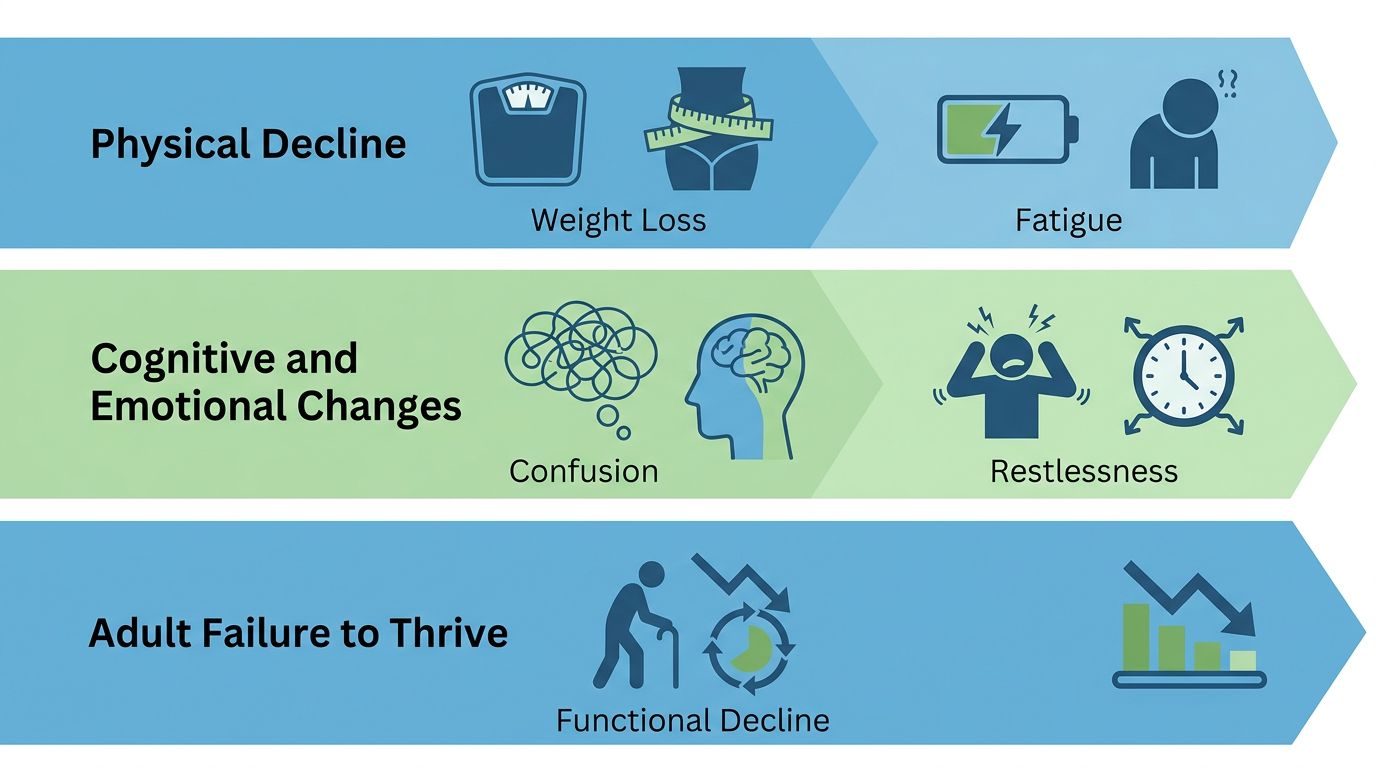
Recognizing the signs: Physical Decline, Cognitive Changes, and Failure to Thrive in hospice readiness.
If you recognize these signs in your loved one, it may be time to consider hospice and end of life care in Dayton, Ohio. Early recognition gives you the gift of time to plan, to access holistic support, and to focus on making every remaining moment as comfortable and meaningful as possible. We treat your family like our own, and we are here to help you navigate this path. Recognizing these signs is the first step. In the next section, we’ll discuss how to have that compassionate conversation with your healthcare provider.
Please note: These clinical signs should be evaluated by a medical professional. This information is for educational purposes and is not a substitute for a personalized medical assessment.
How Early Recognition Benefits Patients and Families
Recognizing the signs it’s time for hospice early brings significant benefits for both patients and families. At Cherish Hospice, we see how timely planning can transform a difficult period into one of comfort and connection. When families access hospice and end of life care in Springfield, Ohio early, they gain access to a full circle of support. We cannot change the outcome, but we can affect the journey—and that journey begins with education and compassionate guidance.
Improved Pain and Symptom Management
Early hospice enrollment allows our team to manage symptoms proactively, often preventing the crises that lead to emergency calls. Conditions like adult failure to thrive and terminal restlessness can be deeply distressing, but with consistent monitoring and a personalized care plan, we can keep patients comfortable. Under the direction of our Medical Director, we focus on gentle interventions that honor each individual’s wishes. Our skilled nurses adjust medications and comfort measures in real time. Our 24/7 dedicated response team ensures that no family faces a symptom crisis alone, offering reassurance at any hour. By addressing symptoms early, we help patients maintain dignity and enjoy meaningful moments with loved ones.
Emotional and Spiritual Support for the Entire Family
A hospice diagnosis affects the entire family, not just the patient. Recognizing needs early gives us time to build deep, trusting relationships and offer meaningful emotional and spiritual care. Our spiritual support coordinators and social workers address traditions, beliefs, and fears. For families that may not yet qualify for traditional hospice, our Bridge Program provides a vital lifeline. Through this program, we offer nursing guidance, advance directive counseling, and disease-management education, helping families plan ahead and reduce anxiety. Our bereavement and grief counseling begins before loss occurs and continues for at least a year afterward. This commitment reflects our belief that care always matters, and we treat your family like our own.
Reducing Hospitalizations and ER Visits
When a patient enters hospice care early, we can significantly reduce the need for stressful hospital visits. By managing symptoms at home and providing hands-on care, our team prevents the sudden declines that often lead to 911 calls. A proactive transition to hospice care means we anticipate needs rather than react to emergencies. Families feel empowered knowing they have expert support just a phone call away. Our consistent presence and early intervention help keep patients in the place they call home, surrounded by familiar comforts. This approach not only preserves a patient’s dignity but also reduces the emotional toll on caregivers.
Early recognition of hospice needs opens the door to a calmer, more supported experience for everyone involved. By focusing on comfort, we help families navigate this chapter with greater peace of mind. Results may vary based on individual patient conditions.
Practical Steps to Assess Hospice Readiness
Recognizing the signs it’s time for hospice can be one of the most challenging yet compassionate steps a family can take. Building on the philosophy of comfort-focused care we explored, this section walks you through concrete ways to evaluate whether your loved one may be ready for hospice support. At Cherish Hospice, we believe that understanding these practical indicators helps families make informed, timely decisions so that comfort and dignity remain the focus.
Recognizing Functional Decline and Weight Loss
A steady decline in activities of daily living is often the most visible indicator of hospice readiness. As a caregiver, you can track changes by observing how independently your loved one manages essential tasks. Key areas to monitor include:
- Bathing and personal hygiene without assistance
- Dressing appropriately for the weather or time of day
- Eating meals without prompting or physical help
- Moving safely from bed to chair or walking short distances
When you notice a pattern of worsening dependence across several of these areas, especially combined with noticeable weight loss or dwindling appetite, it signals a deeper physical decline. Physicians sometimes diagnose this constellation of symptoms as adult failure to thrive, a condition commonly associated with advanced illness. You might also observe episodes of terminal restlessness — agitation, confusion, or repetitive movements that emerge in the final stages of disease — which can be particularly distressing for families. Tracking these changes week to week gives you a clearer, more objective picture to share with the medical team.
Understanding the Six-Month Prognosis Criteria
A natural question families ask is how a doctor decides if a patient has six months or less to live. The answer involves clinical judgment grounded in established medical guidelines. Physicians use the Local Coverage Determination, a set of criteria defined by Medicare, to evaluate whether a patient’s disease trajectory aligns with hospice eligibility. Rather than a precise timeline, the six-month prognosis represents a doctor’s best clinical estimate based on the illness’s typical course, the patient’s response to treatment, and the functional and nutritional markers you have been observing at home. According to Cherish Hospice’s FAQ resource, our medical team looks for specific clinical signs — such as recurrent infections, progressive weight loss, and declining functional scores — that together indicate the disease has reached an advanced stage. This careful evaluation ensures that hospice care begins when it can provide the greatest comfort and support.
When to Request a Hospice Evaluation
If your observations align with the signs we have discussed, it is time to initiate a conversation with the primary care doctor. You do not need to wait for a physician to bring up the topic. We encourage you to share your tracking notes directly: describe the functional losses you have witnessed, the unintentional weight changes, and the episodes of restlessness that concern you. You can request a hospice evaluation simply by saying, “Based on the decline I am seeing, can we discuss whether a hospice consultation makes sense now?” In our experience, these honest conversations often bring relief and clarity. When selecting a hospice program, look for providers whose care model reflects strong quality standards — for example, agencies that hold hospice accreditation through recognized bodies like the Accreditation Commission for Health Care demonstrate a commitment to rigorous performance benchmarks. Remember, requesting an evaluation does not commit you to anything; it simply opens the door to expert guidance. As you move forward, know that after readiness is established, Cherish Hospice is here to begin care when you are ready. Results vary based on individual patient conditions; consult a healthcare professional for personalized advice.
Having Compassionate Conversations About Hospice
Recognizing the signs that a loved one may need additional support often brings a mix of emotions—sadness, worry, and uncertainty. When illness progresses and curative treatments offer diminishing returns, shifting focus toward comfort and quality of life can feel daunting. We cannot change the outcome, but we can affect the journey. Having compassionate conversations about hospice is an act of love that honors your loved one’s wishes and opens the door to specialized comfort care. These discussions are never easy, but approaching them with empathy, patience, and the right tools can make a profound difference for the entire family.
Starting the Conversation with Your Loved One
Bringing up hospice can feel overwhelming, but the approach matters more than finding perfect words. LeadingAge, a respected aging-services association, provides valuable frameworks for navigating sensitive end of life care conversations. Their guidance emphasizes open-ended questions that invite reflection rather than resistance. Instead of asking, “Do you want hospice?” try, “What are you hoping for in the coming weeks?” This shifts the dialogue from clinical decisions to personal priorities.
Active listening is the foundation of these talks. Validate emotions before presenting information—acknowledge fear, frustration, or sadness with phrases like, “I can see how hard this is.” When your loved one feels heard, they become more receptive to learning about hospice care. Remember that this first conversation plants a seed; it does not need to resolve everything. Care always matters, and showing up with compassion sets the tone for every discussion that follows.
Involving the Care Team and Family
A unified approach strengthens the conversation and reduces the burden on any single family member. Schedule a family meeting that includes the primary care physician and a hospice nurse whenever possible. At Cherish Hospice, we encourage families to invite our clinical team into these discussions early, as our nurses and medical director can answer clinical questions and clarify what comfort-focused care truly means.
We treat your family like our own, and that starts with bringing everyone to the same table. When doctors, nurses, and family members share a consistent message, your loved one experiences less confusion and greater trust. Hospice care coordination also eases caregiver stress by distributing responsibilities among professionals and relatives. Consider designating one family member as the primary communicator to streamline updates, while allowing everyone to voice concerns and ask questions during these meetings.
Addressing Common Fears and Misconceptions
- Myth: Hospice means giving up. Fact: Choosing hospice shifts the priority from curing illness to maximizing quality of life. It is an active form of care that addresses physical, emotional, and spiritual needs.
- Myth: Hospice accelerates death. Fact: Hospice focuses on comfort, not cure, and does not hasten or postpone the dying process. Skilled symptom management often improves a patient’s remaining time.
- Myth: Once you choose hospice, you cannot change your mind. Fact: Patients may discontinue hospice services at any time and resume curative treatments if they wish. The choice always remains with the patient and family.
Cherish Hospice also offers volunteer services, including memory-book creation and companionship visits, that provide emotional support during and after these conversations. These resources remind families that they are not alone. Our volunteers help capture meaningful moments, whether through family photography or simply sitting with a patient so caregivers can rest. Addressing fears with facts transforms anxiety into empowerment, allowing families to focus on what truly matters: being present with one another. After these compassionate conversations about hospice take place, families can explore the full range of services Cherish Hospice provides, from pain management to grief counseling, knowing they have made a decision rooted in love and dignity.
Results may vary based on individual patient conditions. Please consult with a healthcare professional for personalized medical advice.
Making Informed Choices for End-of-Life Care
Deciding to transition a loved one into our care is one of the most profound decisions a family will ever make. We understand the emotional weight it carries, and we believe in providing clear, compassionate guidance so you feel supported rather than overwhelmed. Recognizing the hospice six month prognosis guideline, often used to determine eligibility under Medicare, is an important first step. It is not about predicting an exact date, but about acknowledging a shift in focus from curative treatments to prioritizing comfort when a physician believes a life expectancy of six months or less is likely.
As you navigate this journey, several clinical indicators may signal that it is the right moment to consider our support. Common signs it’s time for hospice include a noticeable decline often termed adult failure to thrive, where a person experiences increasing weakness, significant weight loss, and a diminished ability to perform daily activities. You may also observe terminal restlessness, a state of agitation, confusion, or fidgeting that can be deeply unsettling. Recognizing these signs helps families initiate a conversation with healthcare professionals about the next appropriate steps.
When evaluating providers, we encourage you to look for benchmarks of excellence. Cherish Hospice adheres to the rigorous quality standards established by the Community Health Accreditation Program (CHAP). This accreditation is a signal of our commitment to superior patient assessment, care planning, and family support, giving you confidence in the care your loved one will receive.
Ultimately, understanding the signs it’s time for hospice—whether it is failure to thrive, terminal restlessness, or a steady overall decline—empowers you to make an informed and loving choice. We believe in open communication and shared decision-making every step of the way. At Cherish Hospice, we live by the philosophy that We cannot change the outcome, but we can affect the journey, because for our family and yours, care always matters. As with any healthcare decision, results may vary, and we encourage you to consult with a healthcare professional for personalized medical advice.
Resources
- Get Guidance on Comfort-Focused End-of-Life Care
- Access Grief Counseling and Bereavement Support Services
- Get Rapid Hospice Care Initiation Within 48 Hours
- Explore Volunteer Opportunities in Hospice Care
- Discover 24/7 Hospice Care With Alternative Therapies
- Find Spiritual Care and Grief Support in Springfield
- Learn About Hospice Benefits for Veterans
- Get CMS-Approved Hospice Accreditation Through ACHC
- Explore Policy and Resources for Senior Care Advocacy
- Access Hospice Nursing Certification and Resources