
Hospice vs Palliative Care: Key Differences Explained

Table of Contents
- Hospice vs Palliative Care in Springfield, Ohio: Understanding Your Options
- Core Differences Between Hospice and Palliative Care
- When to Transition from Palliative to Hospice Care
- Insurance and Care Planning for End-of-Life Options
- Comfort Care and Advanced Considerations in End-of-Life Care
- Common Questions About Hospice vs Palliative Care
- Empowering Your Family’s Journey in Springfield, Ohio
Hospice vs Palliative Care in Springfield, Ohio: Understanding Your Options
When exploring hospice vs palliative care in Springfield, Ohio, understanding the nuances of end-of-life care and comfort care can guide your decision.
Hospice care is comfort-focused support for patients with a terminal prognosis — typically when a physician estimates six months or less of life expectancy — and no longer pursuing curative treatment. At Cherish Hospice, we emphasize that hospice provides holistic physical, emotional, and spiritual care, always centered on dignity. Our approach neither hastens nor postpones the natural process but ensures comfort throughout the journey. We cannot change the outcome, but we can affect the journey.
Palliative care, by contrast, is comfort care available at any stage of a serious illness, even while receiving curative treatments. It can be accessed alongside therapies aimed at recovery, making it a flexible option for managing symptoms and improving quality of life. This early integration of comfort care can provide vital relief. In this way, hospice is actually a specialized form of palliative care, with specific eligibility criteria tied to a terminal diagnosis.
In Springfield, Ohio, providers like Cherish Hospice offer both types of care to meet a range of needs. Ultimately, the decision between hospice vs palliative care should be based on thorough discussions with healthcare providers and the patient’s goals. For a detailed hospice care overview, we encourage you to explore how our team can support you. We treat your family like our own — care always matters.
(Results may vary based on individual patient conditions. Please consult with a healthcare professional for personalized medical advice.)
Core Differences Between Hospice and Palliative Care
A common question families face is: what exactly is the difference between hospice and palliative care? While both approaches prioritize comfort and quality of life, understanding the distinct goals, eligibility requirements, and treatment options is essential for making informed decisions. These two models of care are often confused, but they serve individuals at different points in their health journey. We at Cherish Hospice want to help you navigate these distinctions with clarity and compassion.
The differences between hospice care and palliative care become clear when you examine the core purpose of each. Palliative care focuses on relieving the symptoms and stress of a serious illness, and it can be provided at any stage, from diagnosis onward, alongside curative treatments. The hospice care philosophy, by contrast, centers entirely on comfort when a cure is no longer the goal, honoring the belief that we cannot change the outcome, but we can affect the journey. Our team provides this kind of comfort-focused support to ensure every moment is filled with dignity and personalized attention.
To better understand these key differences, the table below offers a quick-reference comparison. This information is drawn from trusted resources, including the National Cancer Institute’s definitions of these care models.
| Aspect | Hospice Care | Palliative Care |
|---|---|---|
| Goal of Care | Comfort and quality of life; no curative treatments | Symptom management; curative treatment allowed |
| Eligibility | Terminal diagnosis with prognosis of 6 months or less | Any stage of serious illness; no prognosis requirement |
| Curative Treatment | Not covered; focus is entirely on comfort | Can be combined with curative therapies |
| Location | Home, hospice facility, nursing home, or hospital | Hospital, clinic, home, or long-term care facility |
| Insurance Coverage | Medicare Hospice Benefit, Medicaid, most private insurance | Covered under standard Medicare, Medicaid, and private insurance |
As the table illustrates, one of the most significant differences lies in the approach to curative treatment. In hospice care, aggressive treatments are stopped because the priority has shifted to maximizing comfort and quality of life during a person’s final months. Palliative care, on the other hand, can be delivered right alongside procedures like chemotherapy or surgery. This fundamental distinction shapes the entire care experience, from the location where services are provided to the way insurance benefits are structured. The setting for end-of-life care is often wherever a patient calls home, while palliative services are commonly initiated in a hospital or clinic setting.
Despite these structural differences, both hospice and palliative care share an unwavering commitment to relieving suffering. Whether through expert comfort care in a skilled nursing facility or through spiritual and emotional support in a private residence, the goal is the same: to honor the whole person. At Cherish Hospice, our comprehensive approach to comfort includes managing pain, providing nursing care, and assisting with daily needs, all while surrounding the family with emotional and bereavement support. We treat your family like our own.
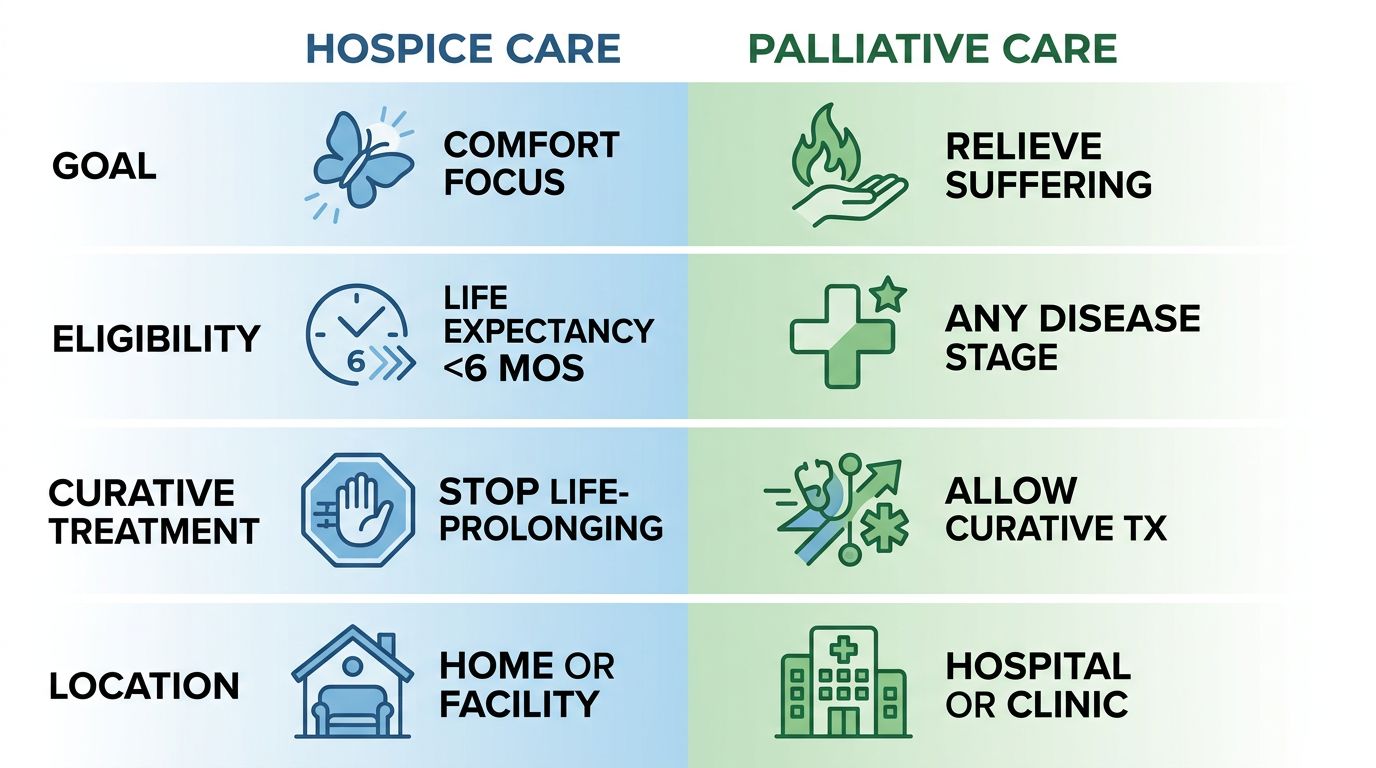
Comparison infographic highlighting key differences between hospice and palliative care.
The infographic above provides a visual recap of the core distinctions, which can be a helpful tool when discussing options with family members. Another key difference to remember is insurance coverage. Hospice is a defined benefit under Medicare, requiring a physician’s certification of a six-month prognosis, whereas palliative services are billed through standard medical insurance plans. This distinction often influences when a transition from palliative care to hospice is most appropriate.
Ultimately, both paths are designed to uphold your loved one’s dignity. Recognizing the differences between the hospice approach and palliative medicine empowers you to ask the right questions and choose the support that aligns with your family’s values. Whether seeking symptom relief early in a diagnosis or focusing fully on comfort in a later stage, know that compassionate, professional help is available. Please consult with a healthcare professional for personalized medical advice, as results and eligibility vary based on individual patient conditions.
Disclaimer: Please consult with a healthcare professional for personalized medical advice. Patients may discontinue hospice services at any time; hospice care focuses on comfort rather than cure.
When to Transition from Palliative to Hospice Care
Understanding the distinction between hospice vs palliative care is the first step, but recognizing when to make the transition is equally vital. At Cherish Hospice, we understand this is a deeply personal decision, and knowing the signs can provide clarity during an uncertain time. Palliative care focuses on symptom relief and can begin at any stage of a serious illness, often alongside curative treatments. In contrast, hospice care becomes appropriate when the focus shifts entirely to comfort and quality of life. The transition typically occurs when treatments are no longer effective or the burden of treatment outweighs its benefits. According to the National Cancer Institute cancer care guidance, this shift is a pivotal moment in the care journey that prioritizes the patient’s wishes and comfort above all else.
Our team is here to walk you through every step, ensuring you feel supported and informed. We focus on what matters most: your comfort and dignity because we believe care always matters.
Recognizing the Signs That It’s Time to Transition
Recognizing when to move from palliative care to hospice care involves observing both clinical and emotional indicators. A primary clinical sign is a consistent decline in the patient’s functional abilities, despite ongoing treatment. This includes increased difficulty with daily activities like walking, bathing, or eating. A rising symptom burden—such as unmanageable pain, severe shortness of breath, or persistent nausea—that no longer responds well to standard therapies is another strong indicator. Frequent hospitalizations or emergency room visits often signal that a disease is progressing. At this point, the goals of care naturally evolve toward maximizing comfort, which is the core of comfort care. Emotional readiness from the patient and family is equally crucial; this may manifest as a desire to stop curative treatments to focus on quality of life and spend precious time with loved ones. We cannot change the outcome, but we can affect the journey, ensuring it is filled with peace and dignity.
The Role of Curative Treatment in Hospice vs Palliative Care
A fundamental difference in the end-of-life care spectrum is the role of curative treatment. Palliative care is designed to comfortably accommodate ongoing curative therapies. A patient can receive chemotherapy, dialysis, or other aggressive treatments while simultaneously receiving palliative support to manage side effects and improve their quality of life. This flexibility makes the palliative care vs hospice care distinction clearer when treatments lose their effectiveness. For a patient to be eligible for hospice care, a physician must certify a prognosis of six months or less if the disease follows its normal course. At this stage, the focus officially transitions from cure to comfort. Hospice care does not hasten or postpone death; instead, it provides intensive symptom management and holistic support, allowing patients to live their final months as fully as possible. We treat your family like our own by ensuring this transition is handled with compassion and clear communication.
The following table provides a decision matrix to help families match their current situation with the most appropriate care model.
| Scenario | Palliative Care | Hospice Care |
|---|---|---|
| Continuing curative treatment | Recommended — allows ongoing curative therapies | Not eligible; focus is entirely on comfort |
| Life expectancy less than 6 months | Less suitable unless symptom management needed | Recommended — eligibility criteria met |
| Managing complex symptoms | Symptom management alongside treatment | Intensive symptom management as part of comprehensive care |
| Need for caregiver support | Available but limited | Comprehensive caregiver and bereavement support |
For patients who may not yet meet the eligibility criteria for hospice but are struggling with a serious illness, our Bridge Program offers a compassionate solution. This program educates and monitors patients, providing nursing guidance, advance directive counseling, and disease-management advice. It ensures no one falls through the cracks during a period of uncertainty, helping families plan effectively for the future.
Family Discussions and Advance Care Planning
Initiating a conversation about transitioning to hospice care can be emotionally challenging. We encourage families to start discussions early, focusing on the patient’s values, goals, and what quality of life means to them. A helpful approach is to request a family meeting with the healthcare team to review the current medical reality and understand the options clearly. Asking the doctor directly, “Would you be surprised if this condition resulted in death within the next year?” can open a pathway to an honest reflection on the shift from the palliative vs hospice care model. These conversations are the cornerstone of effective advance care planning, which involves documenting wishes through advance directives and appointing a healthcare power of attorney. Our team at Cherish Hospice is available to guide these discussions with experience and empathy, ensuring that every decision honors the patient’s dignity and relieves the family’s burden. Once the decision to transition is made, our comprehensive team steps in to provide 24/7 support, pain management, and spiritual comfort.
Results may vary based on individual patient conditions. Please consult with a healthcare professional for personalized medical advice.
Insurance and Care Planning for End-of-Life Options
After understanding the hospice vs palliative care differences, it is essential to consider how to pay for these services and create a care plan that fits your family’s needs. Navigating insurance and planning ahead can feel overwhelming, but we are here to help you understand your options so you can focus on what matters most: spending quality time with your loved one.
Understanding Medicare and Insurance Coverage
Palliative care and hospice services are covered differently depending on your insurance plan. Understanding these distinctions helps families make informed decisions without unexpected financial burdens. We believe that care always matters, and knowing your coverage is the first step toward peace of mind.
The following table compares how major insurance types handle both palliative and hospice care:
| Insurance Type | Palliative Care Coverage | Hospice Care Coverage |
|---|---|---|
| Medicare Part A | Covers consultations, symptom management | Comprehensive hospice benefit with minimal out-of-pocket |
| Medicare Advantage | Varies by plan; may require referrals | Must cover at least original Medicare hospice benefit |
| Private Insurance | Coverage varies widely | Often similar to Medicare hospice benefit |
| Medicaid | Covered in most states | Covered in all states with hospice benefit |
Medicare Part A offers the most comprehensive medicare hospice coverage benefit with minimal out-of-pocket costs, according to Medicare Advocacy. This makes it a reliable foundation for families seeking end-of-life care support. Medicare Advantage plans must cover at least the original Medicare hospice benefit, but their palliative care coverage can vary significantly and may require referrals. Private insurance plans differ widely—some mirror Medicare’s structure while others have distinct limitations—so reviewing your specific policy is essential. Medicaid provides consistent hospice coverage across all states and palliative care coverage in most states, offering another dependable option for eligible individuals.
We cannot change the outcome, but we can affect the journey by helping you understand these insurance pathways. Always verify your plan’s specific benefits with your provider or a Medicare counselor to avoid surprises.
Creating a Comprehensive End-of-Life Care Plan
A comprehensive end-of-life care plan brings together medical, emotional, financial, and logistical considerations so that everyone involved understands your wishes. We treat your family like our own, and we know that having these conversations early brings comfort and clarity to everyone involved.
Start by documenting your medical treatment preferences. This includes decisions about comfort care measures, pain management approaches, and whether you want life-prolonging interventions. Our team can help you understand what each choice means so you can make informed decisions aligned with your values. Next, address emotional and spiritual needs by identifying support systems—whether through our bereavement counselors, spiritual support, or alternative therapies like Cherish Touch, Cherish Sounds, and pet therapy.
Financial planning is equally important. Review your insurance coverage details, discuss potential out-of-pocket costs with your provider, and consider consulting a Medicare counselor for Medicare-specific questions. Finally, address logistical preferences such as where you want to receive end-of-life care and who should make decisions if you cannot. Our Bridge Program supports patients who do not yet qualify for hospice, offering nursing guidance and advance directive counseling to help families plan ahead.
Results may vary based on individual patient conditions. Please consult with a healthcare professional for personalized medical advice. Protected health information will be handled in accordance with applicable privacy laws, including HIPAA.
Where to Receive Care: Home, Facility, or Hospital
Choosing where to receive end-of-life care is a deeply personal decision that depends on medical needs, family dynamics, and personal preferences. Each setting offers distinct advantages for both hospice and end-of-life care.
Receining care at home allows patients to remain in familiar surroundings with family close by. Our 24/7 dedicated response team provides hands-on care at home, ensuring that skilled nursing, pain management, and daily living assistance are available whenever moments of need arise. Home care offers privacy and comfort, though families should consider whether they have the physical and emotional capacity to support round-the-clock needs. Skilled nursing facilities provide structured medical oversight and relieve family caregivers of daily care responsibilities, making them suitable when medical needs are complex or family support is limited.
Hospital settings offer the highest level of medical intervention for acute symptom management, but they are generally less conducive to the peaceful environment many families desire for comfort-focused care. Whichever setting you choose, our team brings compassionate services—including bereavement counseling, spiritual support, and alternative therapies—to support both patients and families throughout the journey. Patients may discontinue hospice services at any time. Remember that hospice care focuses on comfort rather than cure.
We encourage you to discuss these options with your loved ones and our care team. We cannot change the outcome, but we can affect the journey. Our commitment is to walk alongside you through every decision, offering guidance, comfort, and support when you need it most.
Comfort Care and Advanced Considerations in End-of-Life Care
Building on the broader overview of end-of-life care options, we now narrow our focus to the foundational concept of comfort care and how it intersects with, and differs from, hospice care. At Cherish Hospice, we believe that care always matters, and understanding these distinctions is the first step in ensuring your loved one receives the right support at the right time. Comfort care is fundamentally about alleviating pain and managing distressing symptoms, and it can be provided to any patient, regardless of their diagnosis or whether they are pursuing curative treatments. This approach ensures that a person’s quality of life is prioritized from the moment symptoms become difficult to manage.
In contrast, hospice care is a more comprehensive, interdisciplinary philosophy of care for individuals with a terminal illness who typically have a prognosis of six months or less. While comfort is at its core, hospice extends beyond symptom management to envelop the patient and their family in a holistic support system. This is where our guiding principle comes to life: We cannot change the outcome, but we can affect the journey. The key distinctions become clearer when we compare these two vital care models side by side.
The following table clarifies the relationship between these often-confused terms.
| Aspect | Comfort Care | Hospice Care |
|---|---|---|
| Goal | Alleviate pain and manage symptoms | Comprehensive comfort and support for terminal illness |
| Eligibility | Any patient with distressing symptoms | Terminal diagnosis with 6-month prognosis |
| Team Involvement | Physicians, nurses, sometimes specialists | Interdisciplinary team including chaplains, social workers |
| Services Provided | Pain management, symptom control | All comfort care plus grief support, spiritual care, volunteers |
This comparison highlights that while all hospice care is comfort care, not all comfort care is hospice care. A particularly important distinction is that comfort care can be administered alongside treatments aimed at curing an illness, whereas hospice care focuses exclusively on comfort when curative measures are no longer effective or desired. Recognizing this difference helps families make informed decisions aligned with their values and medical goals, a conversation we navigate with sensitivity and expertise.
At Cherish Hospice, our hospice care services are designed to deliver this comprehensive support. Our dedicated 24/7 response team ensures that skilled nursing and hands-on assistance are always available in moments of need. We manage pain and symptoms under the direction of a medical authority, while also integrating alternative therapies to soothe the mind and spirit. These offerings include Cherish Touch, Cherish Sounds, aromatherapy, and the unconditional comfort of pet therapy. We treat your family like our own, by ensuring that clinical excellence is always paired with profound compassion.
Advanced considerations in end-of-life care also involve supporting patients who are navigating serious illness but do not yet qualify for hospice. Our Bridge Program is specifically designed for this purpose, providing professional nursing guidance, disease management education, and advance directive counseling to help families plan ahead with confidence. This proactive support extends to family members through our robust volunteer services and bereavement counseling, offering companionship, memory book creation, and family photos to capture meaningful moments. Our support for the family continues for a minimum of one year after a passing, ensuring no one grieves alone.
Understanding these differences and advanced care options sets the stage for exploring how Cherish Hospice can support your family during this sensitive chapter. Results may vary based on individual patient conditions. Please consult with a healthcare professional for personalized medical advice.
Common Questions About Hospice vs Palliative Care
Now that we’ve covered the basics of hospice and palliative care, let’s address some common questions. Many families ask us about the hospice vs palliative care difference.
What is the main difference? Hospice provides comfort care for terminal patients with six months or less to live, while palliative care relieves symptoms and stress of serious illness and can be given alongside curative treatment.
Can palliative care be received with treatment? Yes. Palliative care is available at any illness stage. Hospice, a type of end-of-life care, is for when curative options are no longer pursued.
Where is care provided? Both can be delivered at home, in a facility, or a hospice unit. Medicare covers hospice under Part A; palliative coverage varies by setting, according to Medicare Advocacy. We offer both, including our Bridge Program for those not yet eligible, because care always matters.
We hope this clarifies the hospice vs palliative care distinction. Remember, you can discontinue hospice care at any time, and results may vary. We’re here to help.
Empowering Your Family’s Journey in Springfield, Ohio
In Springfield, our hospice care team is dedicated to helping families find peace and comfort. We provide compassionate end-of-life care that honors your loved one’s dignity. Our guiding philosophy is simple: We cannot change the outcome, but we can affect the journey. Through skilled nursing, pain management, emotional and spiritual support, and volunteer services, we treat each family like our own. As a comfort care provider, we focus on quality of life. To learn more, contact our Springfield office at (937) 355-7154 or visit our location page. Care is personalized; results vary.
Resources
- Get Comprehensive Hospice Care with Bereavement Support
- Explore Our Philosophy of Caring, Not Curing
- Explore the Three Pillars of Hospice Care
- Find Hospice Volunteer Roles with Pet Therapy
- Get Hospice Care Contact and Referral Details
- Discover Bridge Program and Massage Therapy in Canton
- Springfield Hospice Care with Bridge Program
- NCI: Comprehensive Cancer Information and Research
- Get Medicare Advocacy for Hospice Care Coverage